
Master the F1 25 Las Vegas GP with optimized setup, strategic tips, and common mistake avoidance
Understanding Las Vegas Strip Circuit Challenges
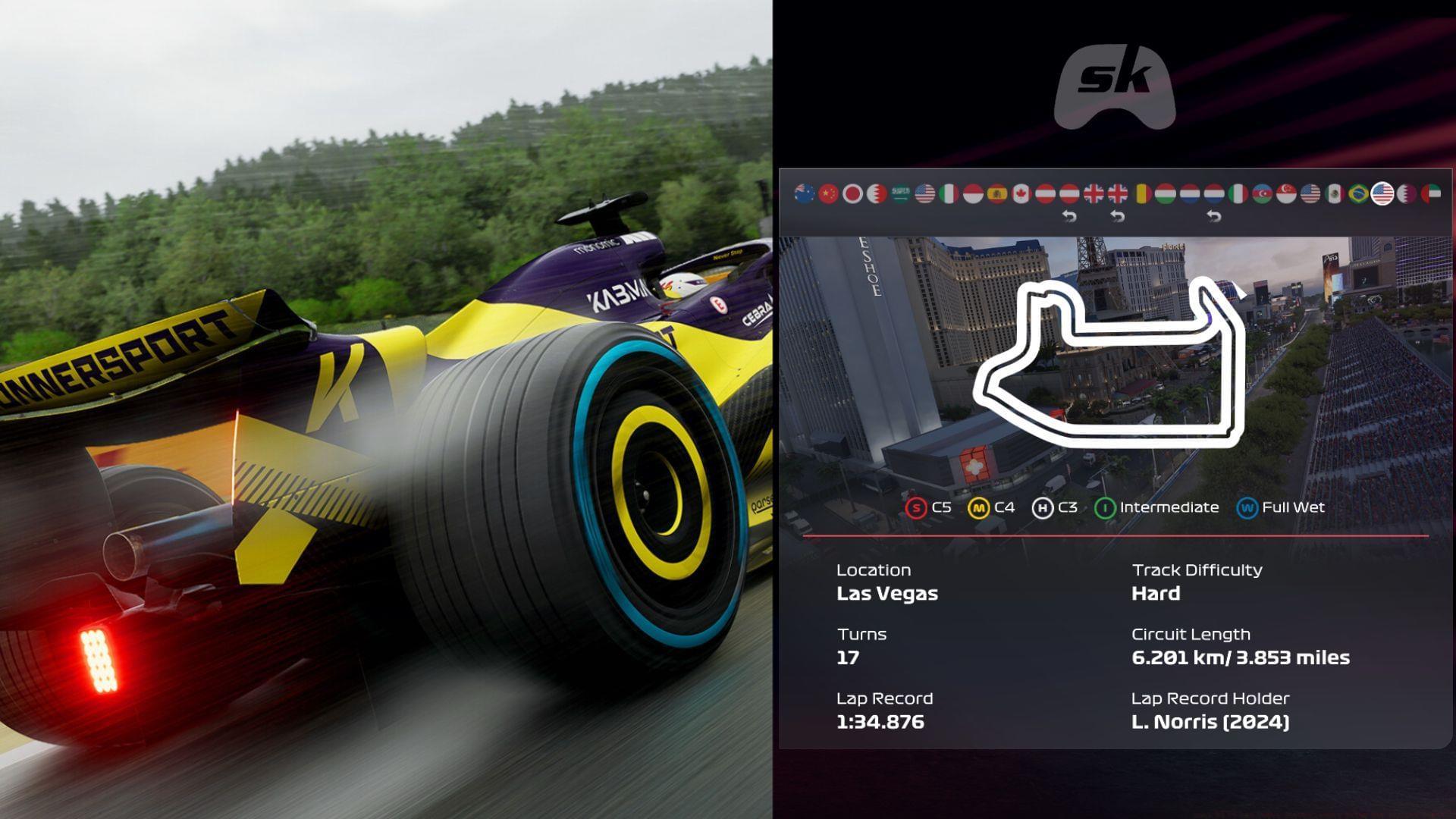
The Las Vegas GP in F1 25 presents drivers with one of the most technically demanding circuits in modern racing. This nighttime spectacle unfolds along the iconic Las Vegas Strip, where blinding neon lights meet extreme performance requirements.
This contemporary street circuit combines blistering straight-line speed sections with unexpectedly complex low-speed technical corners. The track surface features multiple elevation changes and varying grip levels that challenge even experienced virtual drivers. Mastering this circuit requires understanding how the combination of high-speed stability and low-speed mechanical grip interact throughout the lap.
Environmental factors play a crucial role, with cooler nighttime temperatures affecting tire warm-up and track evolution. The circuit’s unique layout means you’ll need to balance aerodynamic efficiency for the long straights with sufficient downforce for the tighter sections where mechanical grip dominates.
Optimal Car Configuration Breakdown
Here’s the comprehensive setup for dominating the Las Vegas GP:
- Differential Adjustment On Throttle: 30% – This setting provides excellent traction out of slow corners while maintaining stability under power
- Differential Adjustment Off Throttle: 55% – Enhances braking stability and rotation into corners without compromising rear grip
- Front Anti-Roll Bar: 15 – Balances turn-in response with mid-corner stability through the circuit’s technical sections
- Front Right Tyre Pressure: 24.3 psi – Optimizes temperature distribution and contact patch for right-hand dominant corners
- Front Left Tyre Pressure: 24.3 psi – Maintains consistency across the front axle while managing wear
- Rear Right Tyre Pressure: 21.5 psi – Provides additional grip for acceleration zones and traction areas
- Rear Left Tyre Pressure: 21.5 psi – Balances rear axle behavior and tire degradation management
This configuration prioritizes straight-line velocity while ensuring the car remains planted through the circuit’s challenging low-speed complexes. The carefully calibrated differential settings significantly enhance traction when exiting slower corners onto the extended straights, where most overtaking opportunities occur.
The suspension geometry works in harmony with the aerodynamic profile to maintain stability over the circuit’s multiple surface changes and elevation variations. This setup proves particularly effective during race conditions where tire management becomes increasingly critical.
Advanced Racing Strategies
Success at the Las Vegas GP extends beyond car setup to strategic execution. The circuit presents three primary overtaking zones: the approach to turn 5, the braking zone into turn 12, and the exit of turn 14 onto the main straight.
Cornering technique requires special attention to the circuit’s unique characteristics. For the high-speed sections, focus on maintaining minimum steering input to preserve momentum. Through the technical complex of turns 5-7, prioritize smooth inputs and early acceleration to maximize exit speed onto subsequent straights.
Pit stop strategy demands careful calculation due to the circuit’s high tire degradation rates. The optimal window typically falls between laps 18-22 for a one-stop strategy, though safety car periods can dramatically alter this calculation. Monitor tire wear closely, as the combination of high-speed corners and abrasive surface accelerates degradation.
Energy recovery system management proves crucial here. Deploy energy strategically on the main straight and through turns 13-14 where overtaking opportunities are highest, while harvesting through the slower technical sections where time loss is minimized.
Common Mistakes and Solutions
Many drivers struggle with consistent performance at Las Vegas due to several recurring errors. The most common setup mistake involves incorrect tire pressure calibration, which leads to inconsistent grip levels and accelerated wear.
Driving errors typically occur in the braking zones for turns 5 and 12, where drivers often brake too late or too aggressively. The optimal approach involves trail braking into these corners to maintain rotation while preserving tire life.
Race strategy blunders frequently involve poor tire management or incorrect fuel load calculations. The circuit’s high-speed nature consumes more fuel than average, requiring careful management throughout the race distance.
Another frequent error involves incorrect differential settings that either create excessive tire spin on corner exit or insufficient rotation on corner entry. The recommended settings provide the ideal balance for this circuit’s unique demands.
Also read: F1 25 review: A Formula One game that knows where it’s going
This setup delivers exceptional straight-line performance while maintaining the mechanical grip needed for the circuit’s technical sections. The balanced approach ensures competitive performance across all race phases, from qualifying laps to long-run race pace.
Read more F1 25-related topics
- Best F1 25 Hungaroring Setup for the Hungarian GP
- Best F1 25 Circuit de Spa-Francorchamps Setup for the Belgian GP
- Best F1 25 Silverstone Circuit Setup for the British GP
No reproduction without permission:GameCDjnh » Best F1 25 Las Vegas Strip Circuit setup for the Las Vegas GP Master the F1 25 Las Vegas GP with optimized setup, strategic tips, and common mistake avoidance