
Master F1 25’s reverse tracks with advanced strategies, LIDAR upgrades, and professional racing techniques
The LIDAR Revolution: Unprecedented Track Realism
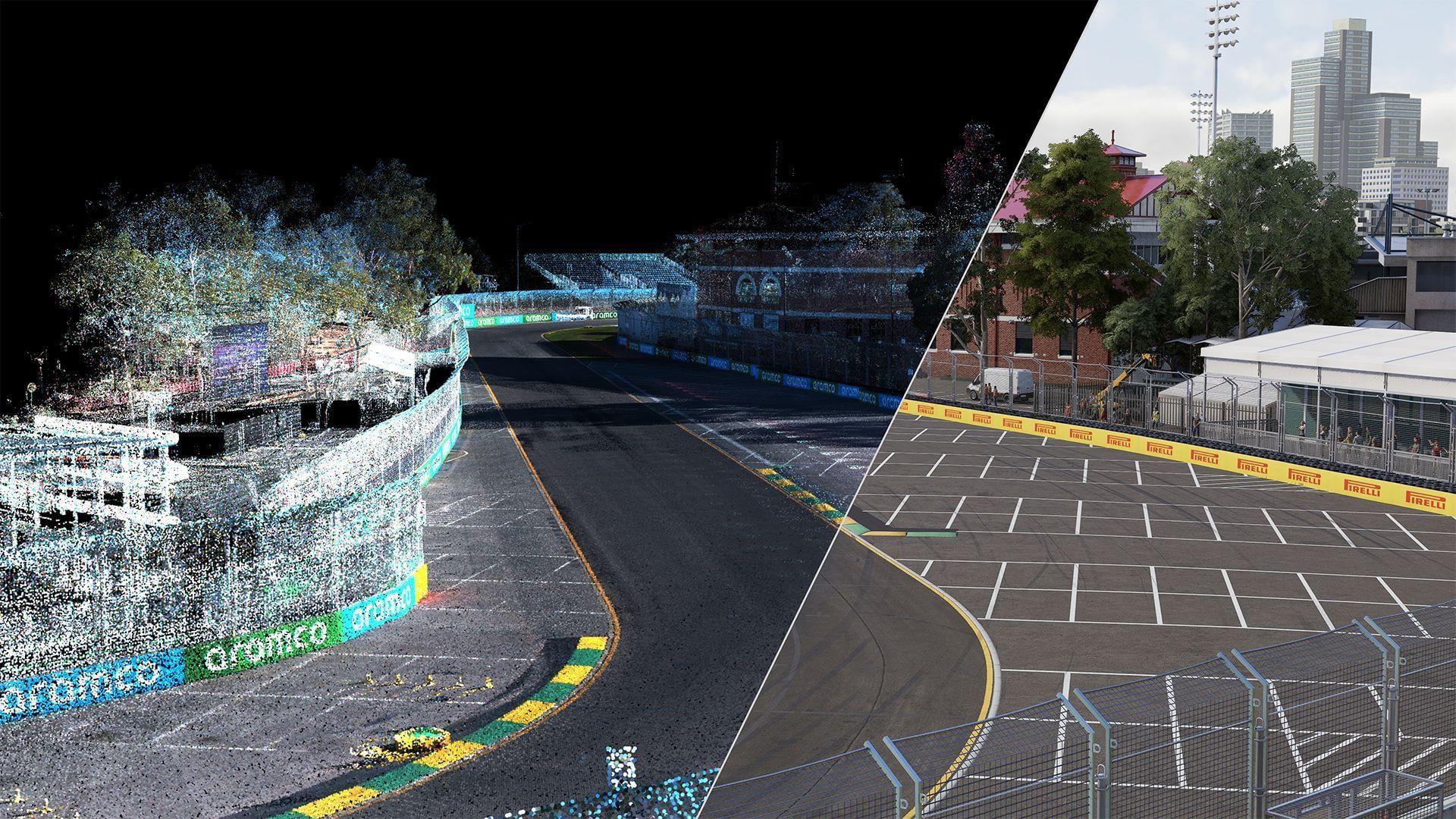
F1 25 represents a quantum leap in virtual racing authenticity, delivering Formula One action with groundbreaking realism and innovative track configurations. Codemasters continues to redefine immersion standards within the racing genre, establishing new benchmarks that distinguish the F1 series from competing simulation titles.
The technological enhancements extend well beyond surface improvements, with comprehensive environmental detailing achieved through advanced LIDAR scanning technology. Moving beyond previous iterations, F1 25 eliminates generic vegetation completely. Racers will encounter precisely replicated flora native to each location, including Melbourne’s distinctive park landscape and Suzuka’s iconic cherry blossom trees.
This fusion of technical precision and visual authenticity creates unparalleled lap-to-lap consistency, establishing new expectations for racing simulation fidelity. The environmental accuracy isn’t merely cosmetic – it provides crucial visual reference points for braking markers and turn-in points that professional drivers utilize in real-world competition.
Reverse Track Breakdown: Three New Racing Challenges
F1 25 introduces a thrilling dimension to race weekends with three inverted circuits: Silverstone Reverse, Austria Reverse, and Zandvoort Reverse. While these may appear as simple mirror images, they function as entirely new racing environments demanding fresh strategic approaches.
Inverted configurations compel drivers to completely re-evaluate racing trajectories, deceleration markers, and passing opportunities. Silverstone’s reversed layout transforms the high-speed Maggots and Becketts complex from flowing sequences into technically demanding corner exits requiring precise throttle control. Austria’s inverted circuit converts descending braking zones into challenging uphill approaches that test brake balance and traction. Zandvoort’s reversed banking and constricted turns present novel handling demands that maximize tire wear and chassis stability.
These reconfigured circuits provide seasoned players with opportunities to rediscover familiar venues through completely different racing perspectives. Simultaneously, the LIDAR-enhanced track surfaces minimize the separation between virtual competition and real-world racing experiences. Consequently, enthusiasts can achieve immersion levels comparable to professional drivers like Max Verstappen piloting contemporary machinery.
Advanced Racing Strategies for Reverse Circuits
Mastering reverse configurations demands strategic adaptation beyond simple directional changes. Begin by identifying new braking reference points during practice sessions – focus on permanent track features rather than temporary signage. Adjust your braking pressure application, as reversed corners often require more progressive brake release to maintain rotational control.
Overtaking strategies require complete revision. Previously favorable passing zones become defensive positions, while new opportunities emerge in unexpected sections. Study replay data to identify where AI drivers struggle with the reversed layouts, then capitalize on these weaknesses during race conditions.
Tire management becomes particularly crucial on inverted circuits. The altered loading patterns create unusual wear characteristics that can ruin a race strategy if mismanaged. Monitor tire temperatures sector-by-sector and adjust driving style accordingly. Banking sections like Zandvoort’s reversed curves generate asymmetric tire stress that demands compensatory steering inputs and throttle modulation.
Common Mistakes and Pro-Level Solutions
Many competitors underestimate the cognitive adjustment required for reverse circuits. The most frequent error involves carrying excessive speed into corners using muscle memory from standard layouts. Solution: Add 10-15 meters to your braking markers during initial laps until new references become instinctive.
Gear selection mistakes plague even experienced drivers on inverted tracks. Corners that previously required downshifts to second gear might now need third gear entries. Practice sequential shifting patterns during time trial sessions to build new mechanical memory.
Vehicle setup adjustments prove essential for reverse circuit success. Consider softening rear suspension on power-heavy exits and increasing front wing angle for improved turn-in response. These mechanical tweaks compensate for the altered aerodynamic balance and weight transfer characteristics of reversed configurations.
Looking for Crossword hints & solutions? Check out latest NYT Mini Crossword Answers, LA Times Crossword Answers, and Atlantic Crossword Answers
Read more F1 25-related articles below:
No reproduction without permission:GameCDjnh » F1 25 turns the tracks around with LIDAR upgrades and reverse racing Master F1 25's reverse tracks with advanced strategies, LIDAR upgrades, and professional racing techniques