
Master Barcelona-Catalunya with this optimized F1 25 setup guide including strategy tips and common pitfalls
Understanding Barcelona-Catalunya’s Unique Challenges
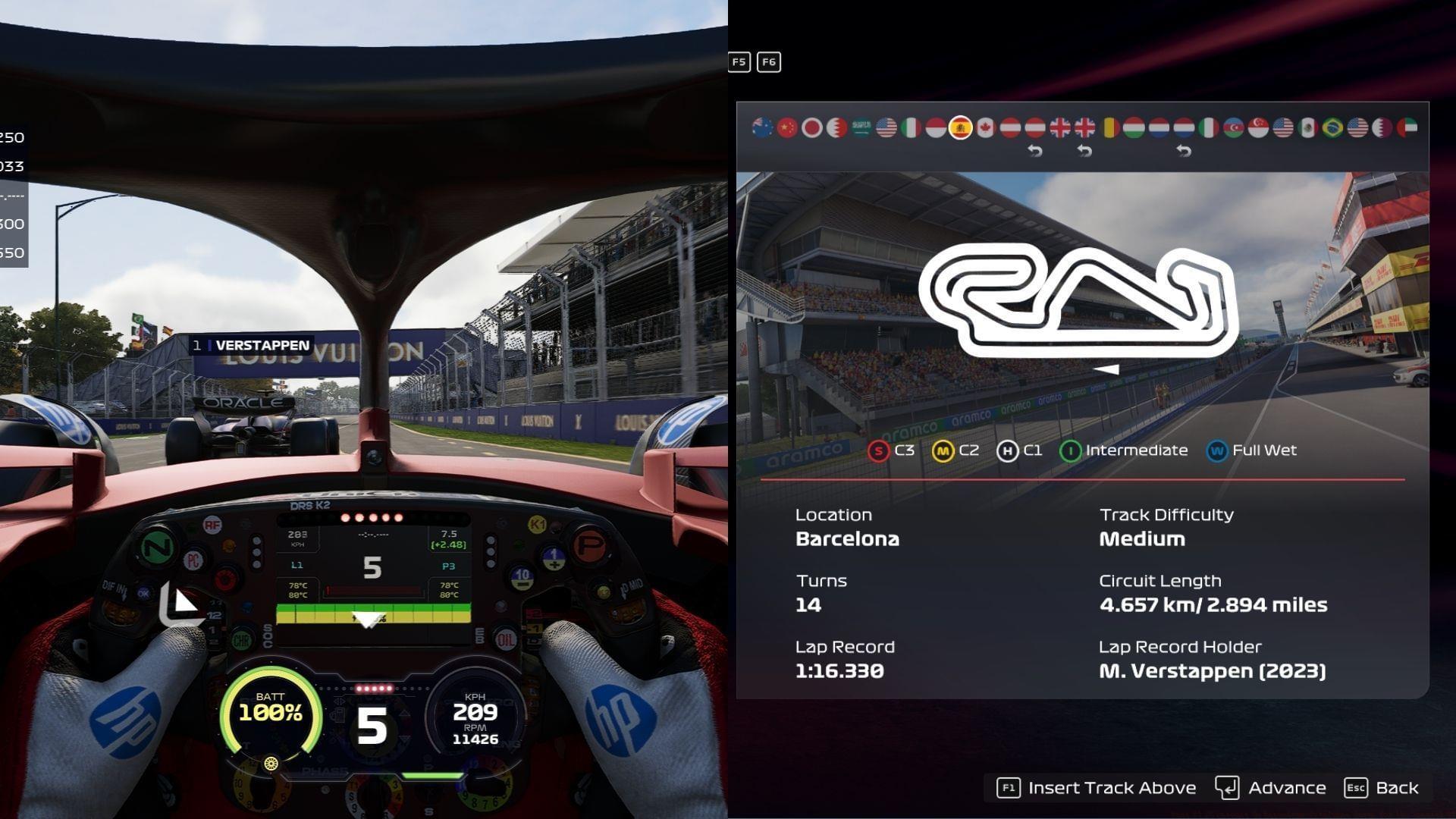
The Circuit de Barcelona-Catalunya presents one of Formula 1’s most comprehensive tests of car setup and driver skill. This legendary Spanish track combines three distinct sectors that demand contradictory performance attributes, making it the ultimate proving ground for any F1 25 competitor.
Montmeló’s challenging layout begins with a high-speed opening sector featuring the sweeping Campsa corner, transitions into a technical middle section with the slow, complex Nissan corner, and concludes with the final chicane that determines straight-line speed. This diversity forces teams to find the perfect compromise between straight-line velocity and mechanical grip.
Front-left tyre wear emerges as the critical performance factor here, particularly through the long right-hand turns of Sector 3. The circuit’s abrasive surface and high ambient temperatures accelerate degradation, making conservation strategies as important as outright pace.
Optimal Car Setup Parameters
After extensive testing and telemetry analysis, this configuration has proven optimal for balancing Barcelona-Catalunya’s conflicting demands:
- Differential Adjustment On Throttle: 100% – Maximizes traction out of slow corners while maintaining stability
- Differential Adjustment Off Throttle: 20% – Enhances rotation into corners without compromising braking stability
- Front Anti-Roll Bar: 11 – Provides responsive turn-in without excessive understeer
- Rear Anti-Roll Bar: 21 – Maintains rear stability through high-speed direction changes
- Front Right Tyre Pressure: 29.5 psi – Balances grip and temperature management
- Front Left Tyre Pressure: 29.5 psi – Critical for managing wear through long right-handers
- Rear Right Tyre Pressure: 20.5 psi – Optimizes traction and tyre life
- Rear Left Tyre Pressure: 20.5 psi – Matches right-side for balanced rear axle behavior
This carefully calibrated setup delivers exceptional mechanical grip through the technical Sector 2 while maintaining competitive straight-line speed for overtaking opportunities into Turn 1. The suspension geometry provides the necessary compliance to handle Barcelona’s notorious curbs without sacrificing aerodynamic platform stability.
Advanced Racing Strategy and Execution
Success at Barcelona extends beyond car setup to intelligent race execution. The circuit’s layout creates specific strategic opportunities that can make or break your race result.
Sector 1 Mastery: Focus on carrying maximum speed through Turn 3 (Renault) to set up the run into Turn 4. The exit of Turn 9 (Campsa) determines your speed along the entire back straight – sacrifice entry speed to maximize exit velocity.
Overtaking Zones: The main straight following Turn 16 provides the prime overtaking opportunity. Use DRS effectively while ensuring you don’t compromise your exit from the final chicane. Secondary opportunities exist into Turn 5 and Turn 10 for brave maneuvers.
Tyre Management: Barcelona’s high degradation requires smooth inputs, particularly through Sector 3. Avoid aggressive steering inputs in Turns 12-13 to preserve the front-left tyre. Managing tyre temperatures through strategic lift-and-coast before heavy braking zones can extend stint length significantly.
Common Mistakes and Performance Optimization
Many competitors undermine their Barcelona performance through avoidable errors in both setup and driving technique.
Setup Pitfalls: Over-stiffening the front suspension to combat understeer often creates excessive tyre wear. Similarly, running rear tyre pressures too low for mechanical grip sacrifices straight-line speed. The optimal setup finds balance rather than extremes.
Driving Errors: The most common mistake is over-driving through Sector 2, sacrificing smoothness for perceived aggression. This overheats tyres and destroys lap time consistency. Another critical error is braking too late into Turn 10, compromising the all-important exit onto the back straight.
Advanced Techniques: For experienced drivers, trail braking into Turn 5 can gain significant time while managing front tyre temperatures. In qualifying, using more curb at the exit of Turn 13 can improve lap times, though this carries race-distance reliability risks. The final chicane requires precise curb usage – too much contact destabilizes the car, while avoiding curbs completely costs valuable time.
No reproduction without permission:GameCDjnh » Best F1 25 Circuit de Barcelona-Catalunya Setup for the Spanish GP Master Barcelona-Catalunya with this optimized F1 25 setup guide including strategy tips and common pitfalls