
Master the legendary Suzuka Circuit with this optimized F1 25 setup guide and racing strategies
Understanding Suzuka Circuit’s Unique Challenges
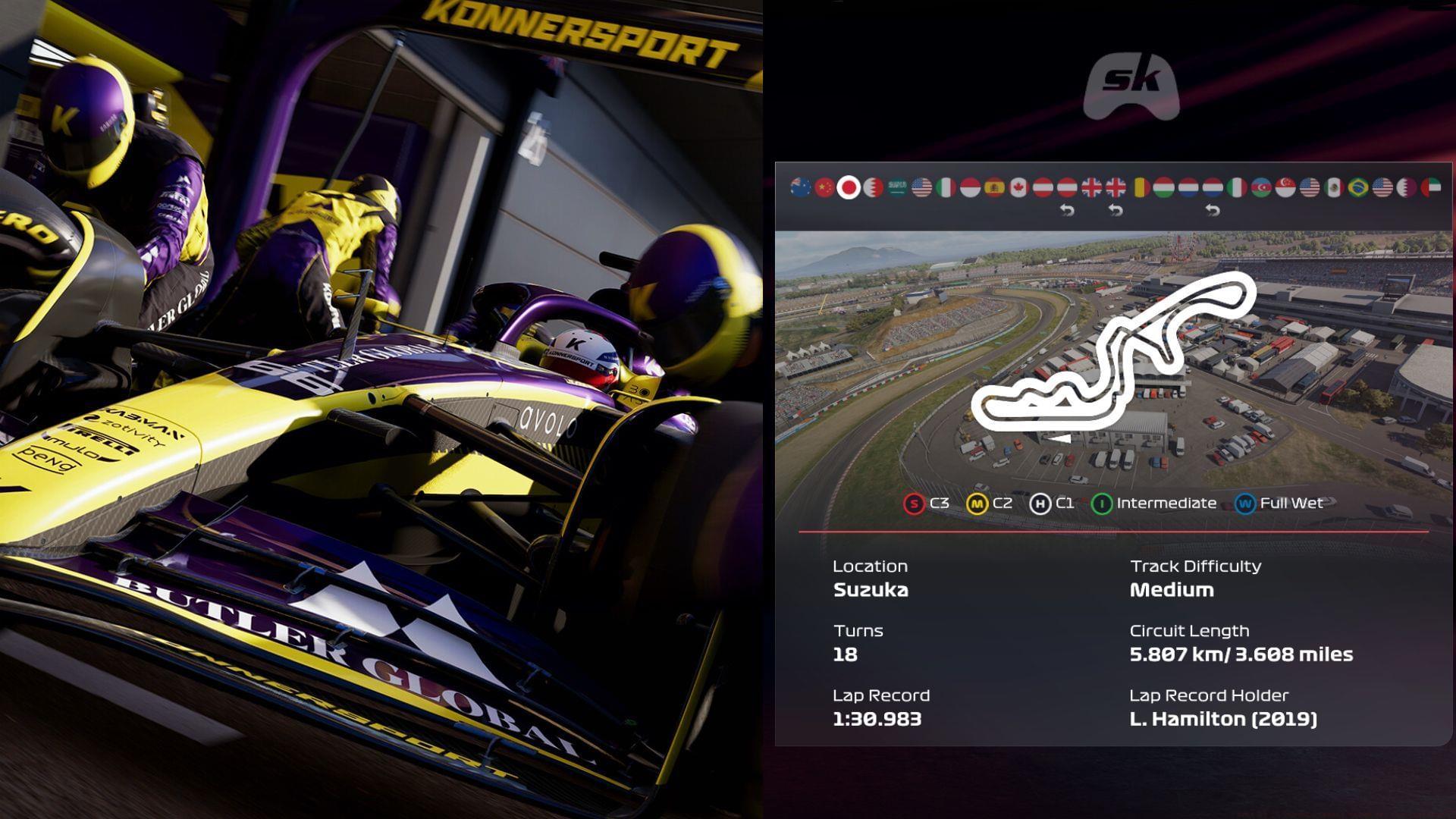
Suzuka Circuit stands as one of motorsport’s most demanding venues, presenting drivers with a relentless test of skill and car setup. The track’s distinctive figure-eight layout creates unique gravitational forces and requires exceptional mechanical grip through its famous sequences. Mastering corners like the high-speed “S” curves, the technical Degner complex, the challenging Spoon Curve, and the legendary 130R demands absolute confidence in your vehicle’s balance and responsiveness.
What makes Suzuka particularly challenging is the minimal runoff area surrounding the circuit. Grass and gravel await any minor mistake, punishing even small errors in judgment or car control. This unforgiving nature rewards drivers who can maintain consistent momentum and precision throughout the entire lap. The circuit’s elevation changes and complex corner combinations mean that setup decisions have amplified consequences here compared to more forgiving tracks.
Success at Suzuka requires a car that transitions smoothly between high-speed directional changes while maintaining stability under heavy braking and acceleration. The circuit rhythm is relentless, with no true rest sections, making driver fatigue and car setup durability critical factors in race performance.
Complete Japanese GP Setup Configuration
Here is the comprehensive setup configuration optimized for dominating Suzuka Circuit in F1 25. These settings have been tested extensively to provide the ideal balance between high-speed stability and technical section agility.
- Differential Adjustment On Throttle: 100% – Maximizes traction out of slow corners while maintaining stability
- Differential Adjustment Off Throttle: 35% – Provides precise rotation during corner entry and trail braking
- Front Anti-Roll Bar: 6 – Ensures responsive turn-in without sacrificing stability
- Rear Anti-Roll Bar: 21 – Controls rear-end movement through high-speed direction changes
- Front Right Tyre Pressure: 29.5 psi – Optimizes front-end grip and temperature management
- Front Left Tyre Pressure: 29.5 psi – Maintains consistent front axle behavior
- Rear Right Tyre Pressure: 21 psi – Enhances traction and rear stability
- Rear Left Tyre Pressure: 21 psi – Balances rear axle performance
Also Read: F1 25 review: A Formula One game that knows where it’s going
Additional recommended settings include running slightly higher rear ride height to manage Suzuka’s elevation changes and camber variations. Consider adjusting brake bias to 52-54% front depending on your driving style and tire wear patterns during longer stints.
Setup Breakdown and Performance Analysis
This Japanese GP setup delivers exceptional performance through Suzuka’s most challenging sections by creating a car that inspires confidence at the limit. The aggressive 100% on-throttle differential configuration provides immediate power application out of the Hairpin and final Chicane, where traction is paramount for lap time. Combined with the lower rear tire pressures, this setup minimizes wheelspin while maximizing acceleration efficiency.
The carefully calibrated suspension tuning creates a car that transitions seamlessly through the technical first sector. The front anti-roll bar setting of 6 provides sharp initial turn-in response for the “S” curves, while the stiffer 21 rear anti-roll bar controls weight transfer through the high-speed direction changes. This balance allows drivers to attack 130R with full commitment, knowing the car will remain stable at extreme speeds.
The strategic tire pressure configuration serves multiple purposes: the higher front pressures (29.5 psi) maintain responsive steering feel and prevent understeer buildup, while the lower rear pressures (21 psi) increase the contact patch for better traction and temperature management. This becomes particularly important during longer stints when tire degradation can significantly impact lap times.
Advanced Racing Strategies and Common Pitfalls
Mastering Suzuka requires more than just the right setup—it demands strategic adaptation to the circuit’s unique challenges. For qualifying sessions, consider slightly reducing rear tire pressures by 0.5-1.0 psi for enhanced mechanical grip, then readjust for the race to manage degradation. The differential settings work exceptionally well for maintaining rhythm through the circuit’s flowing sections, but require smooth throttle application to avoid unsettling the car.
Common mistakes at Suzuka include overdriving the entry to Degner 1, which compromises exit speed through Degner 2, and being too conservative through 130R, sacrificing valuable lap time. The setup’s stability allows you to carry more speed through 130R than you might initially feel comfortable with—trust the car’s balance and commit to full throttle earlier than instinct suggests.
Advanced drivers should focus on managing tire temperatures through sector one, as the consecutive corners can overheat the front tires if attacked too aggressively. Use the first two laps to build temperature gradually, then increase pace as the tires reach optimal operating range. During races, pay attention to how the setup adapts to changing fuel loads—the car will become more responsive as fuel burns off, requiring slight adjustments to braking points and turn-in timing.
Read more F1 25-related articles:
- Best F1 25 Shanghai International Circuit setup for the Chinese GP
- Best F1 25 Albert Park Circuit setup for the Australian GP
- Best F1 25 Lusail International Circuit Setup for the Qatar GP
- Best F1 25 Yas Marina Circuit Setup for the Abu Dhabi GP
No reproduction without permission:GameCDjnh » Best F1 25 Suzuka Circuit setup for the Japanese GP Master the legendary Suzuka Circuit with this optimized F1 25 setup guide and racing strategies