
TL;DR
- Necromancy involves soul manipulation and corpse reanimation using Daedric spirits
- Using obvious necromantic abilities in NPC view triggers Justice system consequences
- Render Flesh is borderline acceptable while raising bodies from ground draws immediate attention
- All Tamriel races can practice necromancy but face cultural opposition and ethical condemnation
- Strategic positioning and ability timing are crucial for successful necromancer gameplay
Embracing the necromancer class transforms your ESO experience, granting dominion over death itself to strengthen your character, harm opponents, and support companions. However, this formidable power carries significant social repercussions, as inhabitants of Tamriel frequently protest your command over deceased entities. This guide explores the clandestine practices of dark magic throughout Tamriel’s 2nd Era and the implications for your Necromancer character development and gameplay approach.
NECROMANCY’S PLACE IN TAMRIELIC HISTORY
Across the Elder Scrolls series, the continent maintains an extensive, frequently contentious relationship with death magic practices, particularly evident during The Elder Scrolls Online timeline. The notorious Mannimarco stands as a prime example of necromantic mastery, commanding Cyrodiil through combined forces of Daedra and resurrected minions with support from his patron Molag Bal.
But what fundamentally constitutes necromancy within this universe? Substantial mysteries persist regarding Tamriel‘s shadowy magical disciplines, with ongoing disputes and disagreements enveloping their implementation.
“Essentially, this magic school concerns inventive control over spiritual essence or animating force, representing one of existence’s foundational components,” clarifies Leamon Tuttle, the game’s Loremaster. “Practitioners employ their capabilities to perform spells, enslave souls, and utilize minor Daedra to revive dead tissue.”
When examining necromantic arts, recognizing that even basic definitions provoke disagreement remains crucial.
“The Mages Guild classifies necromancy as an independent magical category, though some practitioners argue it merely represents specialized branches of mysticism, summoning, and enchanting—posing equivalent risks to conventional combat spells and divination magic.”
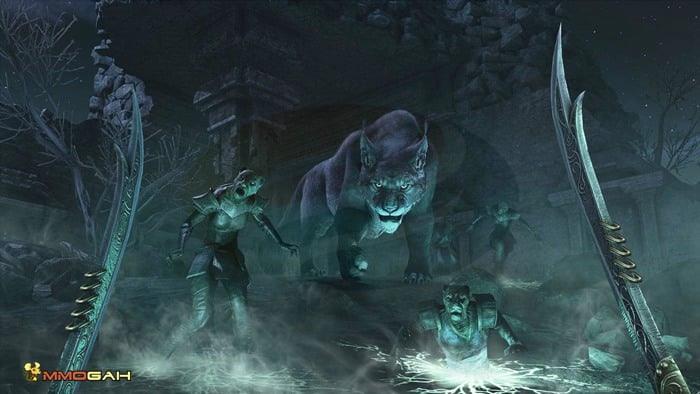
Every racial group throughout Tamriel possesses potential to study necromantic disciplines.
Regardless of personal definitions, death magic has persisted in the world long preceding ESO‘s events, yet despite its ancient origins, the craft remains largely prohibited across civilized societies.
“Most cultures disapprove of these practices, though populations including Redguards and Dunmer consider them absolute sacrilege,” details Tuttle. “Disturbing ancestral remains represents unacceptable behavior for these groups, while institutions such as the Mages Guild oppose it morally, given its interference with mortal spirits.”
Within The Elder Scrolls Online, mastering death magic unlocks terrifying capabilities, though its notorious reputation introduces additional gameplay complexities.
STRATEGIC SUBTLETY IN NECROMANTIC PRACTICE
Committing to dark arts proficiency in ESO reveals that Necromancer gameplay demands tactical discretion absent from alternative class options. During development, designers ensured class selection carried significance beyond merely accessing three fresh Skill Lines, integrating the specialization with the Justice framework to create realistic outcomes for aspiring practitioners.
“We considered connecting necromancy with legal consequences essential for similar motivations behind implementing the Justice system originally,” states Ed Stark, Lead Content Designer overseeing the class and Justice mechanics. “Traditionally, Tamrielic civilization has consistently disapproved of corpse manipulation, so when certain NPCs observe blatant necromantic behavior, they respond with terror or hostility, reporting these actions as criminal offenses.”
How does this impact your gameplay experience? Essentially: Employing specific (though not all) Necromancer powers within non-player character visibility may generate negative repercussions.
“Only abilities we classify as overtly necromantic trigger responses,” elaborates Kyle Nowak, combat designer responsible for the class. “Certain skills occupy gray areas, such as Render Flesh, but summoning corpses from terrain remains unmistakably conspicuous and will create difficulties.”
The Render Flesh restoration skill might seem visually unpleasant, yet Tamriel‘s citizens generally tolerate it. Transforming into an enormous skeletal titan directly inside settlement centers, conversely, almost guarantees local enforcement attention!
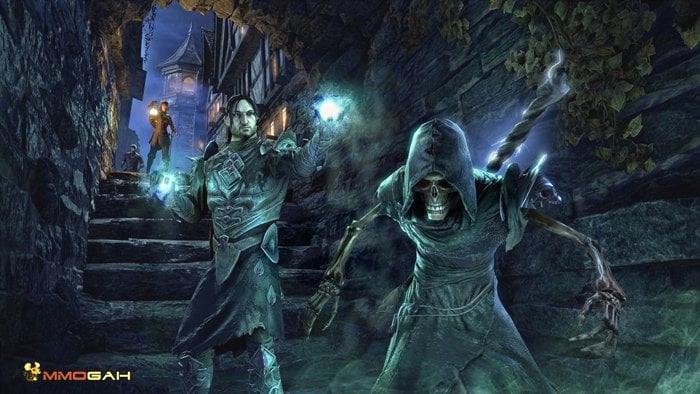
Remain vigilant about observers when animating deceased beings.
“Participants electing to adopt necromancer roles must comprehend they’re engaging with somewhat outlawed specialization,” Stark emphasizes. “This parallels players choosing extensive criminal activities—they accept marginally elevated danger for amplified thrill.”
Despite these considerations, developers crafted Justice integration to deliver both engaging immersion and enjoyable gameplay, preventing constant persecution simply for class selection.
“We implemented protective measures,” Nowak mentions. “For instance, casting spells witnessed by multiple NPCs doesn’t multiply bounty penalties. Additionally, we reviewed substantial legacy content, since characters within dungeons or mission scenarios can observe Justice violations, and players shouldn’t accumulate bounties during quest completion.”
Seasoned necromancer players develop sophisticated approaches to maximize effectiveness while minimizing legal complications. Understanding ability visibility thresholds represents the foundational skill for advanced play.
PRO TIP: Position yourself with terrain obstructions between your character and NPC sightlines when performing high-visibility animations. This simple positioning technique can prevent unnecessary bounty accumulation while maintaining combat efficiency.
The Living Death skill line offers particularly valuable subtle abilities, with Bone Tyrant providing defensive options that rarely trigger Justice responses when used strategically.
Common beginner mistakes include:
- Underestimating NPC sight ranges in outdoor areas
- Using corpse-raising abilities near town entrances
- Failing to utilize terrain features for ability concealment
- Assuming indoor areas provide complete privacy for spellcasting
For optimization, consider pairing necromantic abilities with stealth-enhancing gear or skills from our Class Guide to enhance your strategic options.
Advanced players should master timing their most visible abilities during combat moments when NPC attention focuses elsewhere, such as during enemy attacks or environmental events.
When preparing for major content updates like the Necromancer class introduction, strategic resource management becomes essential. Understanding Weapons Unlock progression alongside class development creates synergistic character growth.
Seasoned adventurers recommend allocating 15-20 hours to master advanced necromancer mechanics, though focused practice with specific ability combinations can accelerate this timeline significantly.
Action Checklist
- Practice high-visibility abilities in remote areas away from NPC settlements
- Master terrain utilization for ability concealment during combat
- Develop situational awareness for NPC sightlines before casting
- Create ability rotation that minimizes Justice system triggers
- Experiment with skill combinations from our Complete Guide to discover optimal builds
No reproduction without permission:GameCDjnh » The Elder Scrolls Online:It’s Necromancy Week! Master the forbidden arts of necromancy in ESO with strategic gameplay and social consequence management