
TL;DR
- Summoner offers the easiest learning curve with pet-based rotation and healing utility
- Red Mage provides balanced complexity with instant-cast resurrection capabilities
- Black Mage delivers maximum personal damage at the cost of movement restrictions
- Each caster provides unique party benefits from healing to damage buffs
- Job popularity inversely correlates with difficulty – choose based on playstyle preference
Final Fantasy XIV presents an overwhelming array of combat roles for newcomers, with caster DPS positions offering distinct magical approaches to damage dealing. Understanding the fundamental differences between Summoner, Red Mage, and Black Mage can transform your gaming experience from frustrating to fantastic.
Your initial job selection carries significant weight, potentially determining whether you continue your Eorzean journey or abandon it prematurely. Before making final decisions, explore the complete spectrum of available roles – including healing responsibilities, tank positioning, melee engagements, and alternative activities like crafting professions or player-versus-player combat. Many players discover unexpected passions when they venture beyond their comfort zones.
The caster DPS category encompasses four distinct magical archetypes, though Blue Mage operates under specialized limited job mechanics that differ substantially from standard progression systems.
Accessibility varies significantly across the magical DPS roles. Summoner and Black Mage provide immediate access for character creation, while Red Mage requires specific progression milestones.
Summoner originates from the Arcanist guild, allowing dual specialization with the Scholar healing job for efficient leveling. Black Mage begins as Thaumaturge, focusing purely on destructive elemental magic from the outset.
Red Mage demands completion of the A Realm Reborn storyline and attainment of level 50 on any combat job, plus ownership of the Stormblood expansion content.
Popularity metrics reveal fascinating patterns – Summoner leads usage statistics due to its straightforward mechanics, followed by Red Mage’s balanced approach, with Black Mage attracting dedicated specialists willing to master its complexities.
Player distribution frequently correlates with mechanical difficulty, as many adventurers prefer roles that don’t demand excessive attention during challenging encounters. This distribution doesn’t inherently reflect job design quality or entertainment value.
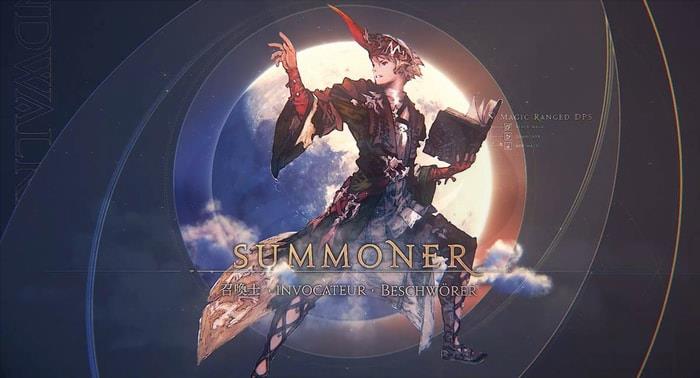
Summoners command arcane powers through their grimoires, orchestrating primal entities in a cyclical combat pattern. Each summoned creature transforms your action bar, introducing temporary ability sets that must be executed within specific timeframes.
The rotation follows an intuitive progression through demi-summon phases. Bahamut and Phoenix dominate alternate cycles, granting powerful temporary spells, while the elemental arcanum summons – Ifrit, Titan, and Garuda – provide situational flexibility without time constraints.
Strategic summon selection becomes crucial for movement management. Titan’s earth-aspected abilities eliminate casting requirements entirely, Garuda accelerates spell recasts with wind magic, and Ifrit delivers potent fire-based attacks with mobility options.
New practitioners often struggle with the dynamic hotbar transformations, as many abilities remain hidden until their corresponding summons are activated.
Summoner’s exceptional mobility stems from minimal hard-cast requirements, enabling consistent damage output while navigating complex raid mechanics.
Beyond damage, Summoner provides critical party support through Resurrection capabilities, easing healer mana management. The Phoenix demi-summon introduces substantial healing potential through area-of-effect and targeted restoration effects.
This healing proficiency establishes Summoner as the premier restoration-focused DPS, valuable across all content types from solo adventures to savage raids.
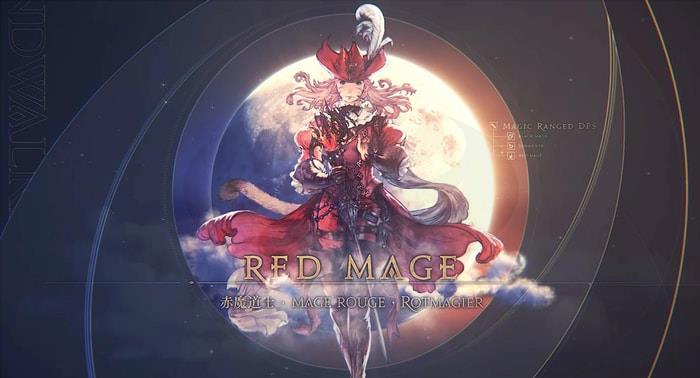
Red Mage embodies magical equilibrium, seamlessly blending black and white mana through elegant rapier techniques. Their gameplay centers on meticulous resource balancing, demanding greater attention than Summoner’s more automated approach.
The Dualcast trait defines Red Mage’s rhythm – casting any spell instantly grants immediate execution of the subsequent magic.
Optimal play involves strategic spell sequencing: initiating with rapid-cast spells to activate Dualcast, then leveraging this effect for powerful long-cast abilities without channeling time.
Mana management presents the primary complexity challenge. Significant imbalance between black and white mana dramatically slows accumulation of the deficient resource, resulting in substantial damage reduction.
Upon reaching threshold mana levels, Red Mages engage in devastating three-strike melee combinations, culminating in instant-cast finishers.
Advanced optimization involves precisely timing melee phases within party buff windows, though this introduces additional execution difficulty.
Their utility toolkit includes Vercure for emergency healing and Verraise for rapid resurrection capabilities under Dualcast effects.
Red Mage’s Embolden ability delivers consistent party-wide damage amplification, while Magick Barrier provides magical damage mitigation with healing enhancement.

Black Mage represents pure magical devastation, channeling elemental forces through arcane staves without supportive party utilities.
The job oscillates between Astral Fire and Umbral Ice phases, each lasting fifteen seconds with distinct purposes.
Astral Fire dramatically amplifies fire spell potency while rapidly depleting mana reserves. Umbral Ice facilitates accelerated mana regeneration, creating a rhythmic cycle of expenditure and recovery.
Movement presents the greatest challenge, as Black Mage possesses limited instant-cast options compared to other casters.
Ley Lines introduces strategic positioning requirements, creating stationary zones that significantly enhance casting speed but demand precise encounter knowledge.
Advanced movement tools include Triplecast for three consecutive instant spells, Swiftcast for immediate casting, and Aetherial Manipulation for rapid relocation to party members.
Despite the optimization complexity, Black Mage remains accessible at fundamental levels for casual content, as most leveling scenarios lack demanding damage verification requirements.
The job’s skill expression manifests through encounter foresight and positional planning rather than reactive adaptability.
Understanding these magical archetypes enables informed decisions based on your preferred playstyle and gaming objectives.
Summoner excels as an introductory magical DPS, allowing newcomers to concentrate on encounter mechanics rather than complex rotation management.
Red Mage’s hybrid design appeals to players seeking engagement beyond traditional caster paradigms, offering substantial utility through rapid resurrection capabilities.
Black Mage attracts dedicated specialists pursuing maximum personal damage output through meticulous encounter planning and positional mastery.
Progression recommendations: Start with Summoner for foundational understanding, transition to Red Mage for added complexity, and graduate to Black Mage for ultimate challenge.
The optimal caster selection ultimately depends on personal enjoyment factors rather than pure statistical performance metrics.
Action Checklist
- Test all three casters through Palace of the Dead to experience high-level rotations
- Practice Summoner’s primal rotation cycle for 15 minutes daily
- Master Red Mage’s Dualcast sequencing in training dummies
- Study Black Mage’s Ley Lines placement through raid guide videos
- Join practice parties for each caster to understand real-world application
No reproduction without permission:GameCDjnh » So You Want to Be a Caster DPS in FFXIV – Job Picking Guide Master FFXIV's caster DPS classes with expert insights on rotations, utility, and playstyle optimization