
In-depth analysis of Nihal Sarin’s quarter-final battle against Magnus Carlsen at EWC 2025 with strategic insights and learning takeaways
Match Overview and Player Backgrounds
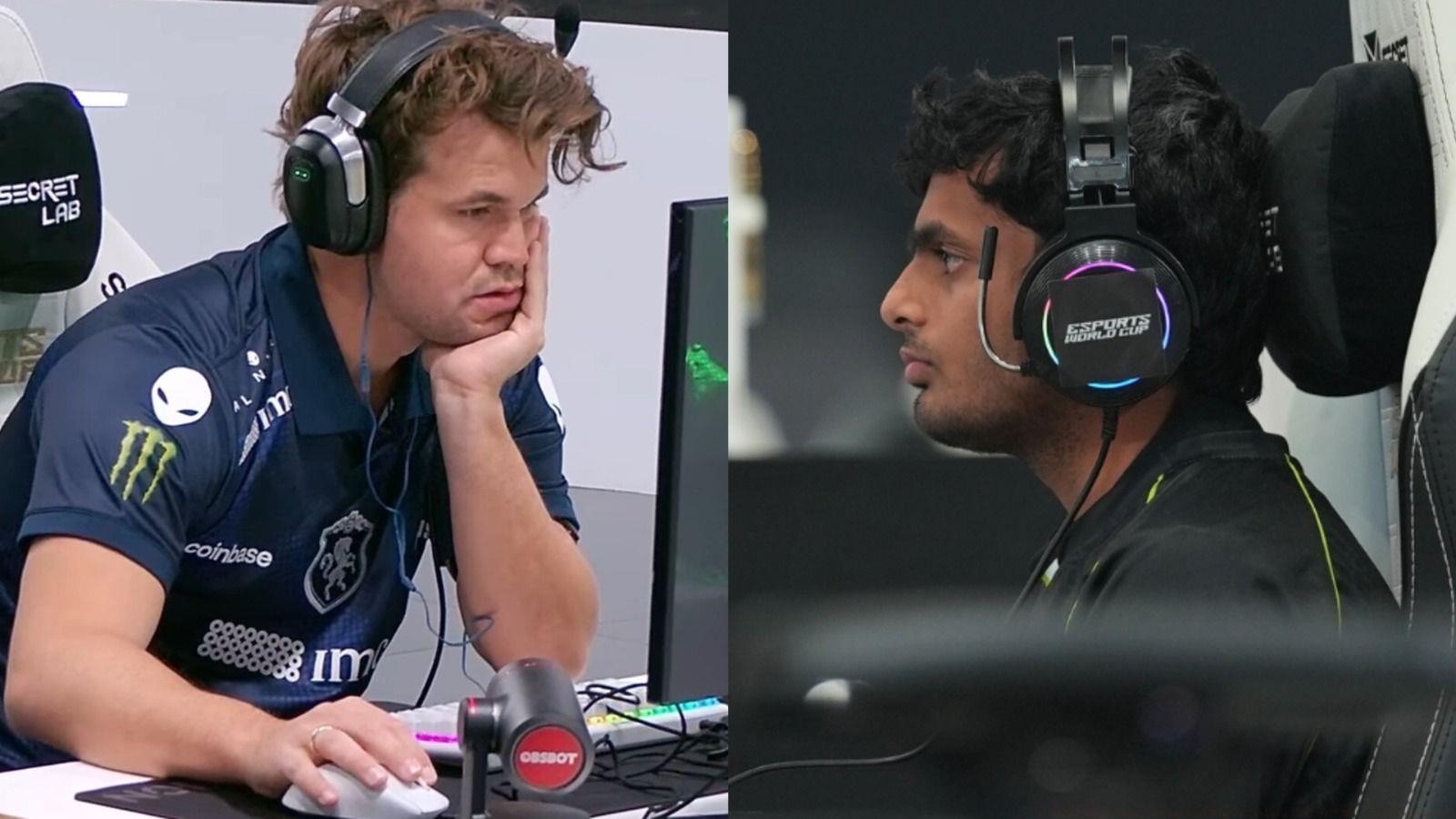
The Esports World Cup 2025 quarter-finals presented a compelling generational clash between chess legend Magnus Carlsen and rising Indian talent Nihal Sarin. This high-stakes encounter showcased the intense pressure of elite rapid chess competition, where time management becomes as crucial as positional understanding.
At just 21 years old, Sarin entered this match as the sole Indian representative who successfully navigated the challenging Last Chance Qualifier (LCQ). Representing Indian esports organization S8UL, the young Grandmaster brought specialized expertise in rapid and blitz formats to the table. In pre-match discussions with Sportskeeda, Sarin acknowledged previous encounters with Carlsen but emphasized the unique challenges posed by the EWC’s accelerated time controls.
Carlsen, maintaining his dominance as World Champion for over a decade, approached the match with his characteristic technical precision and relentless pressure. The stage was set for a battle that would test both players’ strategic depth and psychological resilience under tournament conditions.
Road to the Quarter-finals
Sarin’s journey through the main event began with significant adversity, dropping his initial match against Gen G’s Arjun Erigaisi. This early setback forced the young Grandmaster into the lower bracket, where he demonstrated remarkable resilience by securing consecutive victories against elite opponents.
His undefeated lower bracket run included impressive wins against Team Secret’s Anish Giri and Team Vitality’s Maxime Vachier-Lagrave, both established top-rated Grandmasters. These victories showcased Sarin’s ability to rebound from early tournament pressure and maintain composure against world-class competition.
Meanwhile, Carlsen established his dominance early in the group stage, delivering flawless performances against formidable opponents. He secured victories against Navi’s Nodirbek Abdusattorov and Twisted Minds’ Jan-Krzysztof Duda without conceding a single match, demonstrating the consistent excellence that has characterized his career.
The contrasting paths to their quarter-final encounter highlighted Sarin’s comeback mentality against Carlsen’s sustained dominance, setting the stage for their high-stakes showdown.
Game-by-Game Breakdown
Match 1: Time Management Under Pressure
The opening game revealed Sarin’s strategic preparation and nerve under extreme time constraints. Despite Carlsen’s overwhelming experience advantage, Sarin successfully outmaneuvered the former champion in complex middlegame positions. The critical moment arrived as both players navigated severe time pressure, with Sarin demonstrating exceptional resourcefulness to force a draw despite having only 24 seconds remaining compared to Carlsen’s 2:23.
Match 2: Critical Decision Points
Playing with white pieces in the second encounter, Sarin established promising board control and developed a solid positional advantage. The match reached a pivotal moment when Carlsen unexpectedly offered a draw during the mid-game—a psychological tactic often employed to test opponents’ confidence. Sarin’s decision to decline the offer demonstrated his fighting spirit and belief in his position. However, Carlsen’s technical mastery ultimately prevailed as he completely outplayed Sarin positionally, forcing resignation after the Indian GM attempted a desperate stalemate trap that was easily avoided.
Match 3: The Decisive Blunder
The final game showcased why Carlsen has maintained his elite status for over a decade. While the position appeared balanced superficially, Carlsen maintained subtle positional pressure throughout. The turning point emerged when Sarin, playing black, committed a critical pawn to a6 move that completely exposed and trapped his queen—a classic example of how single moves can decide elite-level games. Carlsen’s instantaneous capitalization on this error demonstrated his unparalleled ability to punish opponent mistakes, leading to Sarin’s resignation and securing Carlsen’s 2.5-0.5 victory.
Strategic Analysis and Key Takeaways
This quarter-final encounter provided valuable insights into high-level rapid chess strategy and player development. Sarin’s performance, while ultimately unsuccessful, demonstrated significant growth in his ability to compete with the world’s elite players.
Time Management Lessons: The match highlighted the critical importance of clock management in rapid formats. Sarin’s ability to secure a draw despite severe time disadvantage in game one shows the value of efficient decision-making processes. However, his time troubles throughout the match also reveal areas for improvement in balancing calculation depth with time conservation.
Positional Evaluation Techniques: Carlsen’s consistent positional pressure, even in apparently equal positions, demonstrates the value of subtle positional advantages. His ability to convert small edges into winning positions remains a hallmark of his gameplay that aspiring players should study.
Avoiding Critical Mistakes: The decisive pawn blunder in game three serves as a reminder that even elite players can commit fundamental errors under pressure. Developing consistent checking mechanisms for candidate moves and maintaining concentration throughout the game are essential skills for competitive success.
For players looking to improve their own game, studying this match provides numerous learning opportunities in time management, positional play, and error prevention at the highest level of competition.
No reproduction without permission:GameCDjnh » Nihal Sarin faces off against Magnus Carlsen (EWC 2025 QF): Results and more In-depth analysis of Nihal Sarin's quarter-final battle against Magnus Carlsen at EWC 2025 with strategic insights and learning takeaways