
Master Valorant with proven strategies: sensitivity, warm-ups, map knowledge, movement, and agent mastery for competitive success
Understanding Valorant’s Competitive Landscape
Riot Games’ tactical FPS masterpiece Valorant continues dominating the competitive gaming scene, maintaining millions of active players across global servers. The game’s strategic depth and precise mechanics create an engaging environment that rewards skill development and tactical thinking.
As Valorant’s esports presence expands, the skill ceiling rises correspondingly, creating increasingly fierce competition at all rank levels. Players aiming for Radiant or Immortal rankings must overcome significant challenges through dedicated practice and strategic understanding of game mechanics.
While natural talent provides some advantage, systematic improvement through targeted practice delivers consistent results. This guide provides structured pathways to accelerate your growth, combining fundamental principles with advanced techniques used by professional players.
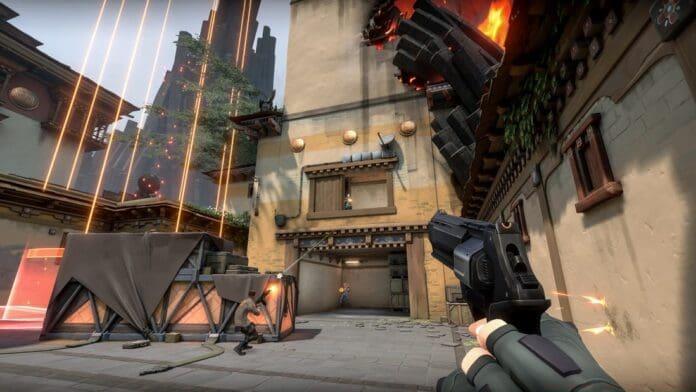
Five Core Improvement Areas for Valorant Excellence
Perfecting Your Sensitivity Configuration: Achieving peak performance begins with finding your ideal mouse sensitivity, which dramatically impacts aiming consistency and muscle memory development. Rather than copying professional settings, use methodical testing to identify what works for your physical setup and playstyle. Start with popular eDPI ranges (200-400) and adjust based on your tracking and flick shot accuracy. For players transitioning from CS:GO or Overwatch, sensitivity conversion tools provide accurate starting points, but final adjustments should come from practical testing in the Range.
Building Comprehensive Warm-up Routines: Professional players universally emphasize the importance of structured warm-ups before competitive matches. Begin with 10-15 minutes in the Practice Range focusing on bot elimination and spray control patterns, then transition to Deathmatch for 20-30 minutes of real-player engagement. This dual approach develops both mechanical precision and game-sense adaptation. Avoid skipping warm-ups regardless of time constraints—even 15 minutes of focused practice significantly improves first-game performance.
Mastering Strategic Map Knowledge: Basic map familiarity represents only the foundation of true map mastery. Advanced players memorize callout locations, common agent ability placements, off-angle positions, and audio cue distances. Spend time in custom games studying each map’s geometry, noting where Sova recon darts, Cypher tripwires, and Killjoy turrets gain maximum effectiveness. Understanding verticality and elevation advantages on maps like Ascent and Bind provides critical duel-winning opportunities.
Advanced Movement Technique Development: Precision shooting alone cannot guarantee victory in high-level play. Movement mastery separates average players from exceptional ones. Practice counter-strafing to instantly stop movement for accurate shots, jiggle-peeking to gather information safely, and shoulder-peeking to bait expensive Operator shots. Bunny hopping, while less effective than in some shooters, maintains momentum during rotations. Combine these techniques with agent-specific movement abilities like Jett’s dash or Raze’s satchels for unpredictable positioning.
Agent Ability Mastery and Counter-Play: Valorant’s character-based system demands deep understanding of agent abilities and their interactions. Begin by mastering one agent completely—understand ability lineups, optimal usage timing, and economy management for ability purchases. Simultaneously, study all other agents to develop effective counter-strategies. Learn which abilities cancel others, how to play around ultimate abilities, and when to save utility for critical rounds. Agent specialization combined with broad matchup knowledge creates adaptable, unpredictable players.
Implementation Strategies and Common Pitfalls
Consistent practice proves more valuable than marathon sessions—regular 60-90 minute focused practice sessions outperform irregular extended play. Track your progress using Valorant’s match history and third-party stat websites to identify improvement areas. Common mistakes include over-adjusting sensitivity, neglecting crosshair placement, and poor economic decision-making.
Avoid the temptation to constantly switch agents or playstyles. Master one role thoroughly before expanding your repertoire. Team communication and game sense development come through conscious effort—review your matches to identify decision-making errors beyond mere mechanical mistakes.
Advanced players focus on predicting opponent behavior through sound cues, ability usage patterns, and economic tracking. Developing game sense requires active thinking during matches rather than autopilot gameplay. Record and analyze your gameplay to identify recurring mistakes and track improvement over time.
Stay tuned to TalkEsport for all the latest news and analysis on CS:GO and follow us on our Twitter, Facebook and Instagram.
No reproduction without permission:GameCDjnh » How to get good at Valorant Master Valorant with proven strategies: sensitivity, warm-ups, map knowledge, movement, and agent mastery for competitive success