
Master Valorant map callouts to transform team communication and gain competitive advantage
Why Map Callouts Are Your Secret Weapon
While precise aiming mechanics provide obvious advantages in Valorant, they represent only one component of competitive success. Strategic communication through effective map callouts often determines match outcomes more consistently than individual shooting skill. Teams that master location reporting and enemy tracking consistently outperform those relying solely on mechanical prowess.
Beyond basic positioning awareness, skilled players integrate knowledge of optimal hiding spots, angle advantages, and most critically, standardized map callouts. Elite competitors understand that transmitting maximum intelligence within limited time windows—whether during engagements or immediately after elimination—requires thorough familiarity with every map’s designated location names. This knowledge transforms from optional to mandatory for players seeking consistent ranking advancement.
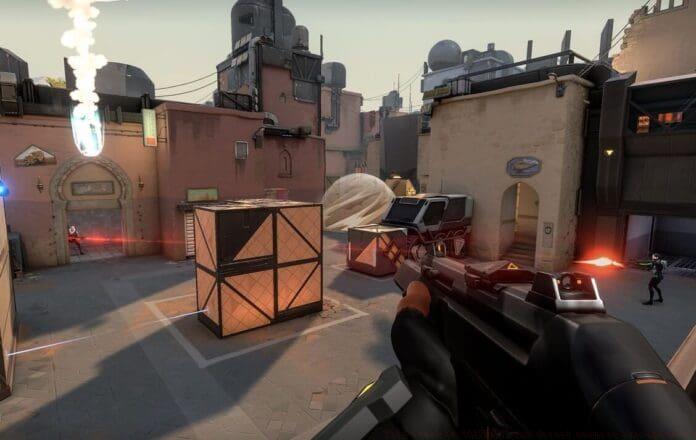
Essential Callout Fundamentals Every Player Must Know
Quality callouts serve to precisely inform teammates about enemy positions and activities. Expert communicators report not just map locations but include crucial contextual details: whether opponents are reloading, planting spikes, executing pushes, or utilizing abilities. Following a structured communication framework ensures your team receives actionable intelligence rather than confusing fragments.
Implement a three-tier information priority system: primary location (A Site, Mid), specific position (Default, Heaven), and enemy status (low health, reloading). This hierarchy prevents communication overload while ensuring critical details reach teammates. Avoid common pitfalls like vague descriptions (‘over there’), excessive detail during firefights, or failing to update callouts as situations evolve.
Surprisingly, implementing proper callout protocols can single-handedly elevate your impact per match. Clear, concise communication enables teammates to make informed decisions, set up crossfires, and execute coordinated retakes with dramatically improved efficiency.
Current Map Landscape: Bind, Haven, and Split
Valorant’s current competitive map pool consists of three distinct environments: Bind, Haven, and Split. Each presents unique callout challenges and opportunities. The limited map count makes mastering location terminology surprisingly achievable for dedicated players, though each requires specific strategic adaptations.
Bind features teleporter mechanics that demand special communication protocols, while Haven’s three-site layout requires expanded callout vocabulary. Split’s verticality introduces multi-level positioning calls that differentiate between same-area elevations. Successful teams develop map-specific communication shortcuts that account for these environmental peculiarities.
Memorization techniques include creating mental associations between callouts and visual landmarks, practicing callout drills in custom games, and developing consistent team-specific terminology. Advanced positioning understanding enables predictive callouts—anticipating where enemies will appear based on timing and previous patterns.
Advanced Callout Strategies for Ranked Play
Beyond basic location reporting, advanced callout strategies separate elite competitors from average players. Implement ‘staggered callouts’ during extended engagements: initial contact reports, followed by position updates, concluding with elimination confirmations. This maintains information flow without overwhelming comms during critical moments.
Develop team-specific shorthand for common scenarios—’A default’ for common planting positions, ‘heaven’ for elevated spots, ‘hell’ for lower areas. Coordinate economic callouts regarding enemy weapon status and ability usage, as this intelligence directly impacts push timing and positioning decisions.
Professional teams dedicate practice sessions specifically to communication drills, recognizing that synchronized callouts create opportunities that individual skill cannot replicate. Implementing structured communication frameworks typically yields faster ranking improvements than focusing exclusively on mechanical aim training.
No reproduction without permission:GameCDjnh » All callouts in VALORANT explained Master Valorant map callouts to transform team communication and gain competitive advantage