
Master Sage’s support abilities in Valorant with advanced strategies, common pitfalls, and optimization techniques
Sage’s Role and Strategic Value
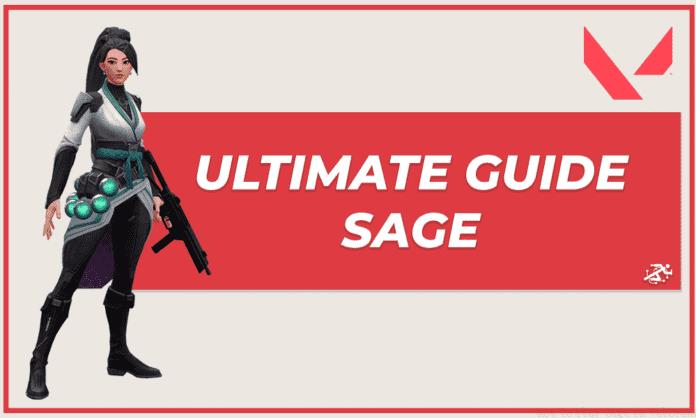
Having Sage on your Valorant roster transforms team sustainability and defensive capabilities dramatically. As the premier support agent, she brings unmatched medical assistance and area control that can determine match outcomes across both casual and competitive play. Her toolkit enables strategic advantages through healing, movement restriction, and even bringing fallen allies back into the fight.
Sage’s abilities create significant tactical problems for opponents. The Barrier Orb effectively blocks sightlines against incoming threats while Slow Orbs drastically reduce enemy mobility, allowing your team to gather intelligence from contested areas. The wall structure also serves as an elevation tool, enabling Sage and teammates to access unconventional vantage points for unexpected engagement angles.
This comprehensive guide explores each ability in depth while providing advanced strategies to maximize their effectiveness in various combat scenarios.
Healing Orb: Strategic Medical Support
The Healing Orb represents Sage’s fundamental support capability with life-saving potential. When activated, you can restore a teammate’s health by targeting them with a left-click. The healing operates at a distance within your line of sight, eliminating the need for direct physical proximity to injured allies. Alternatively, right-clicking while the orb is active allows self-healing, though with strategic considerations about resource allocation.
Healing occurs over a brief duration rather than instantly, requiring timing awareness during active engagements. Importantly, this ability only restores health points and cannot repair damaged armor, making armor preservation a separate strategic consideration. Advanced players should prioritize healing teammates who still have armor intact to maximize combat effectiveness.
Pro Tip: Communicate your healing cooldown status to teammates and prioritize healing duelists and controllers who need to maintain positioning. Avoid healing during active firefights when the brief animation could leave both you and your teammate vulnerable.
Common Mistake: Many novice Sage players waste their self-heal when at minimal health damage. Save your self-heal for when you’ve taken significant damage (below 50 HP) to maximize its value, as the cooldown is substantial.
Slow Orb: Area Denial and Intel Gathering
Slow Orb stands among Sage’s most powerful tactical tools—when deployed, it creates an expanding icy surface that dramatically reduces enemy movement speed. This area-denial capability can bounce off surfaces before activation, allowing for creative deployment around corners and over obstacles.
The slowing effect provides multiple strategic benefits beyond simple movement restriction. Enemies moving through the orb produce distinct audio cues, revealing their position even without direct visual contact. This makes Slow Orb excellent for gathering intelligence while simultaneously disrupting enemy pushes.
Strategic Application: Deploy Slow Orbs in choke points during defensive holds to delay enemy executes. On attack, use them to cover flank routes or post-plant situations where time becomes the critical factor. The orb’s area denial can force enemies into unfavorable engagements or waste precious seconds during time-sensitive scenarios.
Team Coordination Warning: The slowing effect affects all players equally, including teammates. Always communicate your Slow Orb placements to avoid accidentally impeding your own team’s rotations or retakes. Poorly timed slow orbs can create devastating friendly fire situations during critical moments.
Barrier Orb: Creative Positioning and Defense
The Barrier Orb (commonly called ‘wall’) offers unparalleled versatility in both defensive and offensive scenarios. Sage can construct this substantial barrier virtually anywhere on the map, oriented in any direction. Defensively, it excels at blocking entry points and creating temporary safe zones. Offensively, it protects planted spikes and enables elevation advantages through strategic boosting.
Advanced wall usage involves creative positioning that provides unexpected sightlines. By boosting yourself or teammates to elevated positions, you can access angles that opponents rarely check. This element of surprise can secure crucial picks during both attack and defense phases.
Placement Technique: Pressing the ability key a second time rotates the wall between perpendicular and parallel orientations relative to your crosshair placement. Master both orientations to adapt to different site geometries and chokepoints. Experiment with diagonal placements on maps like Ascent and Bind where standard perpendicular walls may not provide optimal coverage.
Advanced Tactic: Use the wall for temporary one-way visibility by positioning it at specific heights. On Haven C Long, for example, a properly placed wall allows you to see enemy feet while keeping your head protected. These advanced techniques require map knowledge and practice but can dramatically increase your defensive effectiveness.
Resurrection: Ultimate Game-Changing Ability
Resurrection represents Sage’s signature ultimate ability with round-swinging potential. Ultimate points accumulate through orb collection each round or eliminations, with kills providing the fastest charging method. This creates an interesting strategic balance between passive ultimate generation and aggressive playstyles.
When your ultimate is charged, approach a fallen teammate’s corpse and activate the ability with a left-click. A brief animation follows, reviving your ally with full health but without armor restoration. The resurrected player emerges with their primary weapon available, ready to rejoin the fight immediately.
Timing and Positioning: Resurrection timing critically impacts its effectiveness. Avoid using it in exposed positions where enemies can easily eliminate both you and the resurrected teammate. Ideal resurrection scenarios occur when you have cover or teammate protection during the vulnerable animation period.
Ultimate Economy: Consider the economic impact of your resurrection. Reviving a teammate with an expensive loadout (Operator, Vandal, Phantom) provides tremendous value, while resurrecting eco-round players may be less impactful. Also evaluate round importance—save your resurrection for crucial rounds like match point or when the spike is planted.
Risk Management: Always clear nearby areas before attempting resurrection. The animation leaves you completely vulnerable, making you an easy target for alert opponents. Coordinate with teammates to create safe resurrection windows through smokes, flashes, or defensive positioning.
No reproduction without permission:GameCDjnh » How To Play Sage in Valorant Master Sage's support abilities in Valorant with advanced strategies, common pitfalls, and optimization techniques