
Master all 12 endings in Tainted Grail with strategic choices, consequences, and optimal paths revealed
The Critical Decision Point: Meeting King Arthur
Tainted Grail: The Fall of Avalon delivers emotionally resonant conclusions that linger with players, not merely for their narrative weight but for how your decisions fundamentally reshape Avalon’s destiny. Every ending trajectory stems from your handling of King Arthur’s fractured legacy and the choices surrounding his ultimate fate.
The pivotal narrative divergence happens immediately upon discovering the broken King Arthur fishing along the shoreline. He appears exhausted, essentially pleading for release from his royal burden to die as an ordinary man rather than a monarch. This encounter represents the primary branching moment where you must decide whether to honor his request for peaceful death, forcibly restore his kingship against his will, or seize his soul for personal power – each selection launching dramatically different story pathways.
Read also: How to complete Broken Strings quest in Tainted Grail The Fall of Avalon
Orrin and Caradoc: The Secondary Choice
Following your decision regarding Arthur, you’ll encounter a mystical portal leading to Orrin and Caradoc, whose conflicting perspectives further shape the narrative direction. Orrin passionately advocates for Arthur’s restoration to salvage Avalon from collapse, while Caradoc maintains firm opposition to any resurrection attempt. This dialogue exchange transcends simple conversation – it establishes the thematic foundation for your eventual conclusion.
Strategic insight: Pay close attention to their arguments as they foreshadow the societal conflicts you’ll face regardless of your chosen path. Orrin represents traditional stability through established authority, while Caradoc embodies progressive change through new leadership structures.
The Grail’s Final Judgment
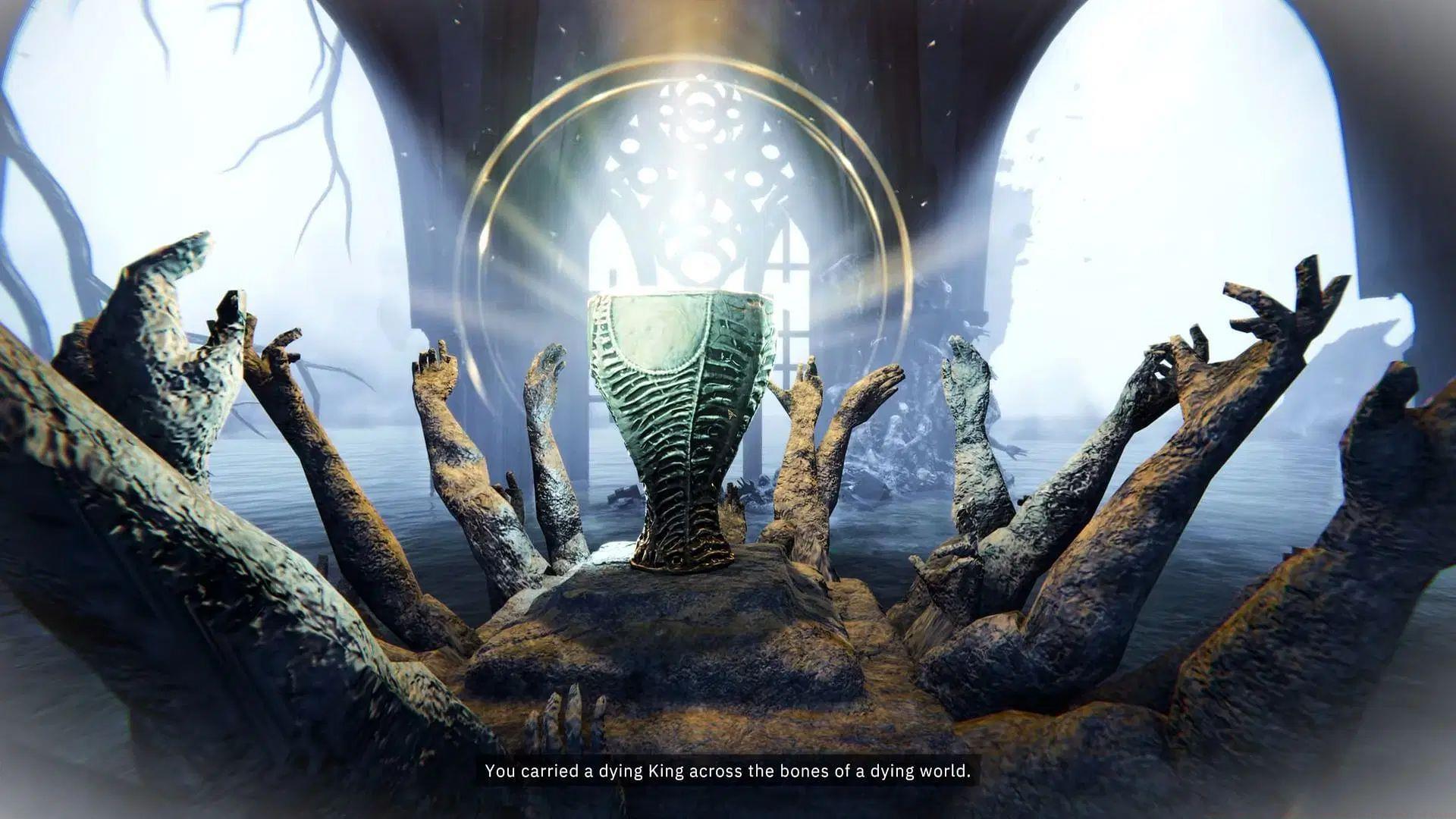
When you ultimately reach the Grail – that enigmatic artifact offering no instructions beyond the capacity for decisive action – you encounter your final opportunity to determine Avalon’s destiny. At this crucial juncture, you decide who inherits Arthur’s soul or whether you completely disrupt the cyclical pattern of power. This definitive choice unlocks the twelve distinct conclusions available in Tainted Grail: The Fall of Avalon.
Advanced player tip: Before approaching the Grail, ensure you’ve completed relevant character quests and built sufficient reputation with potential successors, as these factors influence which options remain available. Missing prerequisite interactions can permanently lock you out of certain endings.
If you elect to utilize the Life Spindle, the Grail proclaims that Arthur will undergo ascension, the bleeding heart becomes sealed, and the chaotic Weirdness becomes subdued and manageable.
Life Spindle Ending: The True Resolution
Similar to the Orrin narrative path, Caradoc vehemently opposes your Life Spindle decision and initiates combat. Evade his projectile attacks and defeat him to acquire his Superior Bow and Wolf’s Howl sword. With Arthur’s essence transferred into the Spindle, Avalon experiences rebirth. The Weirdness ceases spreading disorder – it transforms into a comprehensible natural force. The Red Death plague concludes, Arthur’s mythological stature diminishes, and a more sagacious, stable Avalon emerges.
Combat strategy: Caradoc employs predictable attack patterns. Maintain medium distance to avoid his close-range strikes while creating openings during his arrow-drawing animation. The Superior Bow provides exceptional range for subsequent playthroughs, making this encounter worthwhile beyond narrative considerations.
This conclusion represents the most comprehensive resolution, transforming Avalon’s fundamental relationship with mystical forces rather than simply restoring previous conditions or eliminating threats. The kingdom evolves into something genuinely new rather than reverting to former glory.
Claiming Arthur’s Soul: The Ruler’s Path
Seizing Arthur’s soul immediately installs you as Avalon’s ruler, despite your unpreparedness and inherent flaws. The game refrains from moral judgment regarding this choice but emphasizes the profound responsibility it entails. Avalon develops under your governance, integrating innovative concepts with established traditions. However, your reign concludes abruptly due to the Red Death’s relentless progression, leaving the kingdom’s future indeterminate.
This ending powerfully illustrates the isolation and fragility of authority, demonstrating how legacies frequently outlive their creators. From a gameplay perspective, this path provides unique dialogue options and temporary kingdom management mechanics unavailable elsewhere.
Common mistake: Players often underestimate the narrative acceleration after claiming Arthur’s soul. Complete any unfinished side quests before this decision, as post-choice opportunities become severely limited.
Successor Endings: Seven Alternative Futures
Transferring Arthur’s soul to another individual redistributes both the burden of leadership and associated accountability. Each potential successor remolds Avalon according to their distinct vision:
- Breandan – Transforms Avalon into commerce-focused secular monarchy. Economic prosperity flourishes, but spiritual beliefs decline and unchecked ambition proliferates. Optimal for players valuing material progress over cultural preservation.
- Erfyr – Establishes superficially egalitarian society where traditional elites maintain clandestine control while presenting an illusion of fairness. Choose this for nuanced political commentary rather than genuine reform.
- Yvain – Ineffectual aristocratic leader rapidly loses popular support, dies inconsequentially, and plunges Avalon into disorder and instability. Generally recommended only for completionists seeking tragic narratives.
- One-Eye – Dismantles Round Table legacy and consolidates Avalon under tribal legal systems. Indigenous groups achieve justice, but Camelot experiences significant cultural disruption and social tension.
- Gerf’Hanr – Relocates political authority to Mathair Mines. Tribal principles reconfigure Avalon’s foundation, but Camelot resistance sparks conflict between established and emerging power centers.
- Fionola – Granting Arthur’s soul to Fionola leads Avalon to embrace bizarre and surreal elements. Many citizens adapt by merging with unknown forces, though silent opposition emerges among those preserving their humanity.
- Child of Morgan (Self-ending) – Delivering Arthur’s soul to Morgan’s offspring creates efficient, stable, authoritarian Avalon. For some inhabitants this represents deliverance; for others, imprisonment. The realm’s destiny becomes fixed – no longer autonomous yet no longer adrift.
- Beggar Ending – Discarding Arthur’s soul to a beggar rejects all grand designs. Devoid of purpose or power, Avalon disintegrates into anarchy – its legend concluding without triumph, through silence.
Without Arthur’s power sustaining your existence, your physical form succumbs to the Red Death’s relentless decay. You retain approximately several weeks of life before retreating into seclusion. From an obscure, concealed location, you observe the civilization you helped forge progress forward, regardless of improvement or deterioration. This poignant conclusion generates simultaneous sensations of being both founder and fading observer of Avalon’s ambiguous future.
Advanced Strategies and Common Pitfalls
What distinguishes these conclusions is their consistent refusal to provide clean “victory” conditions. Restoring Arthur establishes temporary order while generating fresh dissent. Eliminating him concludes the cyclical pattern but leaves Avalon without direction. Transferring his soul to others reconstitutes the realm, yet every candidate introduces their own complications. The Life Spindle Ending feels most like authentic resolution, neither resurrecting the former world nor romanticizing Arthur – it progresses beyond him. The Weirdness transitions from terrifying threat to comprehensible phenomenon. Avalon doesn’t revert to previous existence but matures into something more intelligent, restored, and complete.
For optimal gameplay experience, consider these advanced tactics:
- Multiple Save Strategy: Create separate save files before the Arthur encounter and Grail decision to efficiently experience different endings
- Reputation Management: Build relationships with multiple successor candidates simultaneously through careful dialogue choices and completed quests
- Equipment Preparation: Ensure combat readiness before pivotal encounters, particularly for the Caradoc fight in Life Spindle path
- Exploration Completion: Resolve all exploration and side content before final decisions to avoid missing narrative context
This layered narrative approach creates profound emotional impact. Every selection carries significance – not through simplistic morality systems but by determining what kind of civilization you’re prepared to embrace… or relinquish.
That concludes our comprehensive examination of Tainted Grail: The Fall of Avalon endings.
Check out: All Tainted Grail The Fall of Avalon classes (Archetypes)
No reproduction without permission:GameCDjnh » How to get all endings in Tainted Grail The Fall of Avalon Master all 12 endings in Tainted Grail with strategic choices, consequences, and optimal paths revealed