
Master RimWorld Odyssey with expert ship building, resource management, and advanced exploration strategies
Getting Started with Gravship Mechanics
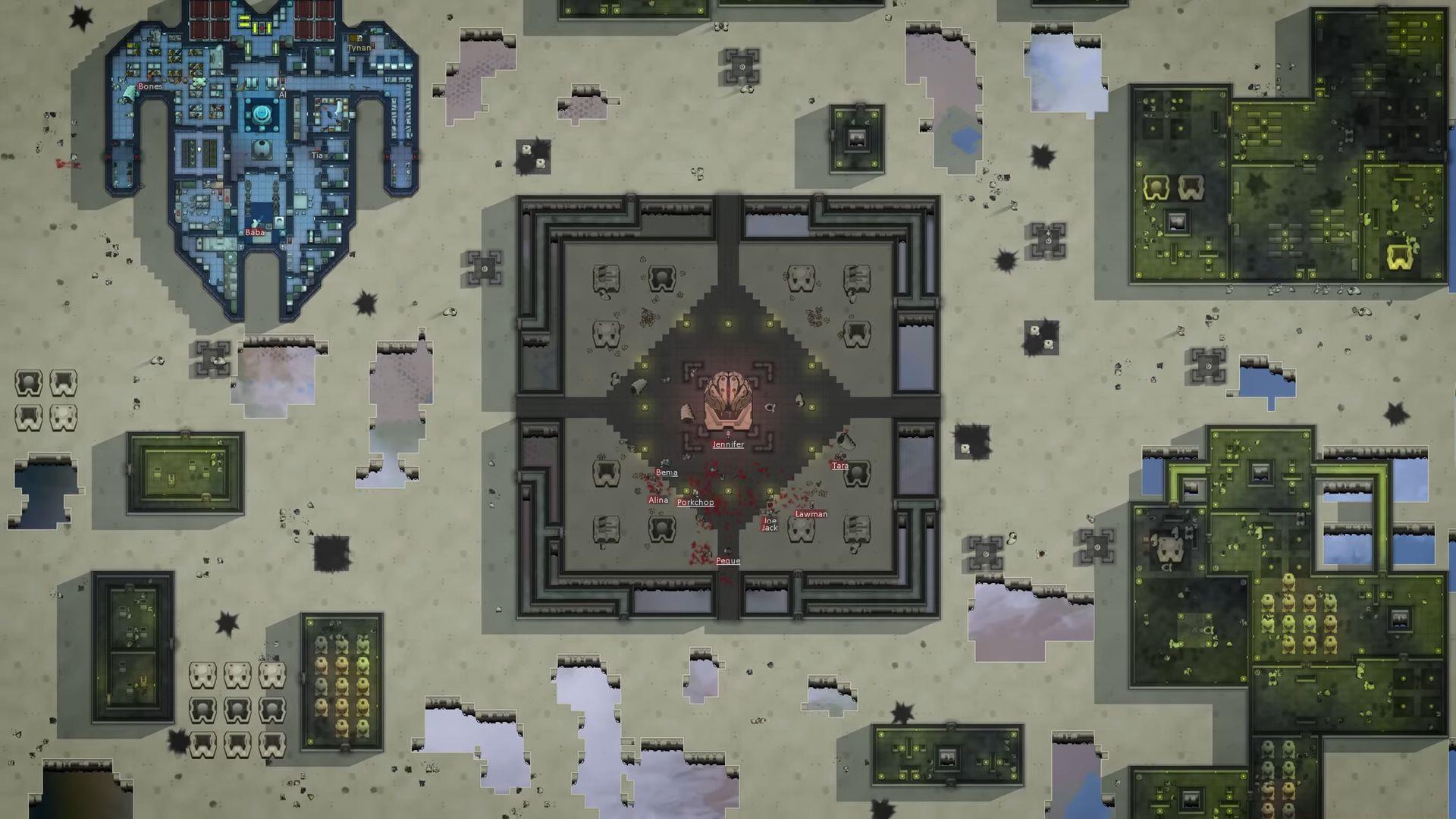
The RimWorld Odyssey expansion launched on July 11, 2025, revolutionizing space exploration with innovative Gravship mechanics. This groundbreaking DLC introduces interstellar travel capabilities alongside three breathtaking new biomes: glacial planes with sub-zero challenges, volcanic lava fields requiring thermal protection, and mysterious glow forests with unique flora. Each environment features an enhanced landmark system revealing ancient ruins, abandoned outposts, and mysterious structures that provide valuable resources and narrative depth.
Understanding gravity fields is fundamental to Gravship operation. Access your Grav Engine interface to visualize the operational zone marked by a distinctive blue circular boundary. Every object intended for transport must be strategically positioned within this field perimeter. Critical indicator: red-highlighted items signal incompatibility with ship movement systems and require repositioning or alternative storage solutions.
Construct your ship’s foundation using Gravship Substructure technology, which creates specialized flooring tiles designed for secure object mounting during travel. Each tile requires precise resource allocation: four units of Steel combined with one Gravlite Panel. Pro tip: always build extra tiles for future expansion and emergency repairs during extended expeditions.
Advanced Ship Building Strategies
Launch preparation demands three critical components: a compact Chemfuel tank, Pilot Console interface, and quadruple small thrusters. Fuel management is crucial—maintain minimum 50 Chemfuel units for basic operations, but allocate 150+ units for extended interstellar journeys. Thrusters operate through spatial displacement rather than direct fuel consumption, requiring unobstructed rear clearance for optimal performance. Common mistake: players often block thruster exhaust paths, causing launch failures and system damage.
Launch quality scoring evaluates multiple performance factors: pilot expertise level, crew complement size, thruster configuration efficiency, and console calibration precision. Suboptimal scores trigger cascading failures including system malfunctions and structural damage. Damage control: always carry repair materials for post-landing maintenance. Advanced technique: position thrusters in symmetrical patterns and train multiple colonists in piloting to ensure mission continuity.
Power infrastructure requires early investment—prioritize cooler systems and research stations with reliable energy sources. Research advancements depend on consistent power, while food preservation demands uninterrupted cooling. Convert biomass to fuel using Biofuel Refineries, but note critical limitation: wind turbines become non-functional in vacuum environments, requiring alternative power solutions for space operations.
Resource Management and Survival
Temperature control systems require strategic implementation. Design compact refrigeration chambers with coolers venting directly into vacuum space for efficient heat dissipation. Enclose these spaces completely with walls and incorporate storage shelves for organized food management. Pro tip: create multiple smaller coolers rather than one large unit to prevent complete system failure during power outages.
Sustainable agriculture utilizes Hydroponics Basins for crop cultivation across all environments, including orbital operations. These systems provide reliable food sources but consume substantial power—balance energy allocation between life support and food production. Advanced strategy: implement staggered planting schedules to ensure continuous harvest cycles during long space voyages.
Essential technology research begins with establishing basic research infrastructure. Priority research paths should include: advanced power generation, environmental control systems, and Gravship enhancement technologies. Mid-game progression unlocks the Gravcore questline—completing this objective grants access to Grav Field Extender technology, dramatically increasing transport capacity for ambitious construction projects.
Expert Exploration Techniques
Space exploration mandates Gravship Hull implementation—specialized airtight barriers preventing catastrophic depressurization during orbital transitions. These protective walls are optional for planetary travel but essential for vacuum survival. Critical preparation: always verify hull integrity before attempting orbital maneuvers and maintain backup oxygen supplies for emergency scenarios.
Gravcore technology represents the pinnacle of ship enhancement, enabling Grav Field Extender construction for expanded operational areas. This advanced system permits larger ship designs and increased cargo capacity, fundamentally transforming exploration capabilities. Strategic advice: prioritize Gravcore acquisition before undertaking major interstellar expeditions to maximize efficiency and survivability.
Mastering these advanced techniques will transform your RimWorld Odyssey experience, enabling successful colonization of distant worlds and handling of complex space-based challenges. Remember that preparation and systematic approach are key to surviving the harsh realities of interstellar exploration.
No reproduction without permission:GameCDjnh » Best tips and tricks to play RimWorld Odyssey Master RimWorld Odyssey with expert ship building, resource management, and advanced exploration strategies