
TL;DR
- Master the 3:2 auto-attack ratio for buff camps to maximize damage output while minimizing health loss
- Implement camp-specific clearing patterns that exploit monster AI behavior for faster, healthier clears
- Develop systematic map scanning routines during camp transitions and combat cooldowns
- Use attack move commands to automatically detect and clear enemy vision
- Optimize Rift Herald takedowns by timing eye attacks and using proper dodge mechanics
While jungle is fundamentally a decision-heavy role, most players overlook critical mechanical execution that directly impacts clear speed, health preservation, and overall game impact. Today we’re breaking down five transformative mechanics that separate elite junglers from average performers in League of Legends. These techniques, adapted from Skill Capped’s expert analysis, provide measurable improvements to your jungle efficiency.
If you’re looking to enhance your gameplay with a fresh start, MmoGah offers various LoL Accounts options to suit your needs.
High ELO junglers consistently demonstrate precise camp kiting not as a stylistic choice but as a calculated efficiency measure. Proper kiting mechanics reduce travel time between camps by 15-20%, accumulating to potentially minutes saved throughout a match that can be redirected toward ganking and objective control.
For buff camps specifically, employ the 3:2 auto-attack pattern: deliver three attacks while the camp monster lands only two. This optimized ratio maximizes your damage output while minimizing incoming damage. The common mistake of single-attack kiting creates inefficient 1:1 trading, significantly slowing clear speed while increasing health costs.
Crucially, integrate ability usage during auto-attack cooldown windows rather than canceling attack animations. Ability cancellation represents one of the most common DPS losses among intermediate junglers, directly impacting early game tempo.
Advanced Camp Clearing Mechanics
Krug Optimization (1:56-2:30 video reference)
Krugs present one of the most mechanically demanding early clears. Begin by pulling both Ancient and Medium Krugs outward, then position yourself opposite the Medium Krug relative to the Ancient. Between auto-attacks, move away from the Medium Krug, creating a back-and-forth pattern that traps the smaller monster in movement cycles, effectively eliminating its damage output entirely.
Execute this technique by auto-attacking, moving right, auto-attacking, moving left, and repeating. This strategic positioning exploits monster pathing AI, allowing you to clear without taking any damage from the secondary threat.
Raptor Management (2:55-3:42 video reference)
Prioritize eliminating small raptors first, as their collective damage output exceeds the large raptor’s over time. Maintain constant kiting rather than stationary clearing since small raptors possess significantly higher attack speed. For Hunter’s Talisman users, distribute attacks across multiple targets to maximize health regeneration benefits before executing all simultaneously.
Wolf Clearing Protocol
Apply the small-first principle while kiting toward your next objective location. This dual-purpose approach maintains clear efficiency while positioning you optimally for subsequent map movements.
Gromp Advanced Techniques (3:50-4:53 video reference)
Gromp possesses a hidden mechanic: bonus attack speed on its initial five attacks. Stationary trading allows Gromp to out-DPS you, while proper kiting creates favorable 1:1 exchanges. Once mastered, integrate ability weaving between auto-attacks while maintaining movement to further reduce damage taken.
Advanced Gromp manipulation involves strategic smite timing. Kite Blue buff toward Gromp’s location and smite Gromp during the Blue clear, saving substantial travel time. Champions with persistent area damage like Amumu and Hecarim can simultaneously damage both camps, representing peak jungle efficiency.
Divide your jungle attention into two distinct cognitive modes: active camp engagement and transitional movement periods. Each phase offers unique information-gathering opportunities that professional junglers systematically exploit.
Combat Phase Attention Cycling
During camp engagements, implement attention cycling between immediate combat requirements and map intelligence. Focus on spell execution and kiting mechanics during ability casts, then shift focus to the minimap during auto-attack intervals. This rhythmic attention management ensures you maintain both mechanical precision and situational awareness.
Consistently monitor teammate health bars as primary gank indicators. Significant health fluctuations often signal recent trades that may create vulnerable enemy laners, transforming routine clears into opportunistic advantages.
Transitional Camera Control Optimization
Optimal Lane Checking Methodology
Movement periods between camps represent ideal opportunities for detailed lane assessment. Implement either manual camera control via cursor movement or utilize the F1-F4 hotkey system for rapid teammate perspective jumping.
For optimal F-key usage, reconfigure your hotkey settings under camera controls to align each key with corresponding allies, creating an intuitive scanning system.
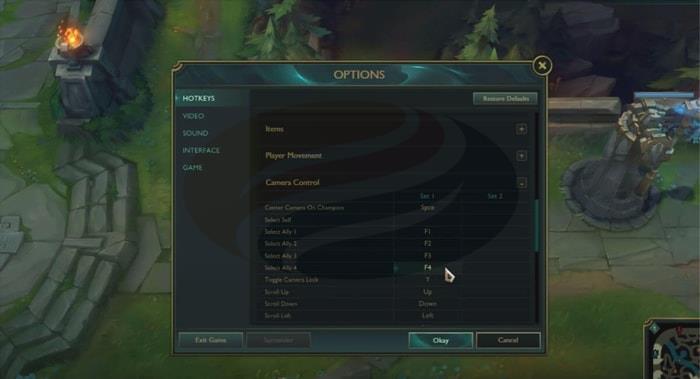
Execute this scanning protocol: issue movement command toward next camp, sequentially press F1-F3 to assess lane states, then spacebar to return to your champion. This systematic approach ensures comprehensive map awareness without sacrificing clear efficiency.
Strategic summary: During combat, allocate at least 50% attention to minimap and health bar monitoring. During transitions, implement the movement-command → F-key scan → spacebar return sequence as standard operating procedure.
When navigating the jungle, consistently implement two complementary ward detection methods to minimize enemy vision advantage and maintain offensive unpredictability.
First, path through adjacent brushes to proactively reveal enemy wards. Second, utilize attack move commands instead of standard movement to automatically engage any concealed vision devices along your path.
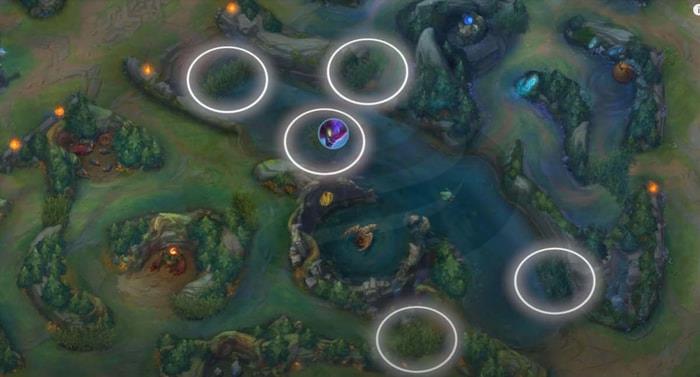
For invasion scenarios, issue attack move commands along your intended route, then execute your F-key lane assessment sequence. Returning via spacebar will frequently reveal automatic ward clearance as a beneficial side effect.
Residual Vision Mechanics
Understand the critical Residual Vision mechanic: disabled wards maintain vision of your location for approximately four seconds post-destruction.
Never proceed directly toward your intended destination after clearing a ward. Instead, move in the opposite direction for the vision duration before redirecting to your actual path, effectively deceiving enemy tracking efforts.
Rift Herald represents one of the most impactful snowball tools currently available. Most players inefficiently circle the objective attempting eye attacks, significantly extending takedown time while increasing vulnerability to counter-ganks.
Initiate the engagement with a single auto-attack followed by immediate repositioning behind the creature. Time your next attack to strike the eye immediately before its charge animation, accelerating subsequent eye appearances and reducing overall clear duration by 25-30%.
Rift Herald executes two major swipe attacks at 66% and 33% health thresholds, typically following eye strikes. Avoid the common error of backward dodging—the attack’s hitbox frequently connects regardless. Instead, move directly through Herald’s model to consistently evade damage while maintaining optimal positioning.
Crucially, ensure an eye is visible before reducing Herald below 2400 health, as eyes won’t reactivate below this threshold. Optimal execution involves waiting until approximately 1400 health before eye striking for instant execution.
The dropped Eye of Herald remains collectible for 40 seconds—significantly longer than most players anticipate—providing flexibility in retrieval timing.
How many of these advanced mechanics were already in your toolkit? Implementing even 2-3 of these techniques will dramatically improve your jungle performance. For continued improvement, subscribe to Skill Capped and monitor MmoGah for additional LoL News and strategic insights.

You may also find our Complete Guide helpful for understanding broader game mechanics that complement these jungle techniques.
Action Checklist
- Practice the 3:2 auto-attack ratio on buff camps until muscle memory develops
- Implement Krug positioning technique in 3 consecutive games
- Configure F1-F4 hotkeys to correspond with ally positions
- Establish the movement → F-key scan → spacebar return routine during transitions
- Practice attack move commands in jungle paths to automate ward detection
- Master Rift Herald eye timing by practicing the single attack → reposition → eye strike sequence
No reproduction without permission:GameCDjnh » Top 5 Secret Jungle Tips You Need to Know Master essential jungle mechanics to optimize camp clearing, map awareness, and objective control in League of Legends