
TL;DR
- Skill gems replace traditional skill trees, offering dynamic combat abilities through socketed items
- Support gems dramatically enhance skill effectiveness when properly linked in gear sockets
- Gems only level up when equipped in currently worn armor or weapons
- Proper UI management allows quick skill swapping and efficient combat rotations
- Strategic gem combinations can multiply damage output and create specialized builds
In Path of Exile, skill gems revolutionize traditional RPG progression by replacing static skill trees with dynamic, socketable abilities. Unlike conventional systems where skills unlock automatically, these magical crystals grant active combat capabilities that must be strategically integrated into your gear. As you progress from novice to grandmaster, understanding gem mechanics becomes crucial for optimizing your character’s potential.
Acquiring skill gems involves multiple pathways: defeating enemies for random drops, completing quest rewards that guarantee specific gems, or purchasing from vendors using currency. Each acquisition method offers different reliability – quest rewards provide guaranteed progression tools while farming drops enables build flexibility. Veteran players often target-farm specific gems to complete their ideal character setups.
The gem ecosystem divides into two primary categories with distinct functions. Skill gems grant active abilities for direct combat use, while support gems modify and enhance those skills when linked in item sockets. Support gems typically feature circular icons and include “Support” in their names. Understanding this distinction is vital since support gems don’t function independently – they require connection to active skill gems through linked sockets on your equipment.
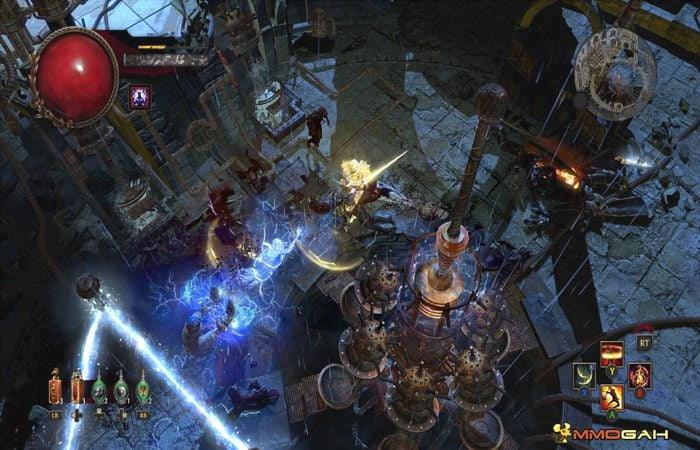
Activating skill gems requires equipping them in socketed items, after which they automatically populate the skill bar in your interface’s bottom-right corner. Each assigned skill corresponds to specific keybindings that trigger instant activation during combat. Mastering this placement system enables fluid ability rotations and responsive gameplay in intense encounters.
When your gem collection exceeds available skill slots, efficient management becomes essential. Hover your cursor over any skill button and left-click to access your complete gem library for reassignment. This flexibility allows tactical adjustments between encounters – swapping single-target skills for area-clearing abilities when facing different enemy types.
Common interface mistakes include overcrowding skill bars with situational abilities and neglecting to reorganize skills for specific boss fights. Optimal practice involves maintaining core rotation skills on primary bindings while reserving secondary slots for utility or cooldown-based abilities. For deeper interface customization, explore our Class Guide for advanced control schemes.
Skill gems evolve through experience gain, receiving incremental stat improvements at each level threshold. The interface provides clear visual cues when leveling becomes available – a plus symbol appears on the right screen edge indicating readiness for upgrade. However, a critical limitation often catches new players off-guard: gems only accumulate experience when socketed in currently equipped armor or weapons. Storing gems in inventory halts their progression completely.
Support gem effectiveness depends entirely on proper socket linking. The most powerful combinations emerge from 5- or 6-linked items that allow multiple support gems to enhance a single skill. For example, linking Multiple Projectiles with Damage Modifiers and Projectile Speed can transform basic attacks into screen-clearing phenomena. Understanding socket colors and links is fundamental to maximizing your build’s potential.
Advanced optimization involves matching gem colors to socket requirements – strength (red), dexterity (green), and intelligence (blue). This knowledge becomes especially valuable when planning endgame gear, as detailed in our Weapons Unlock guide for weapon-specific gem strategies.
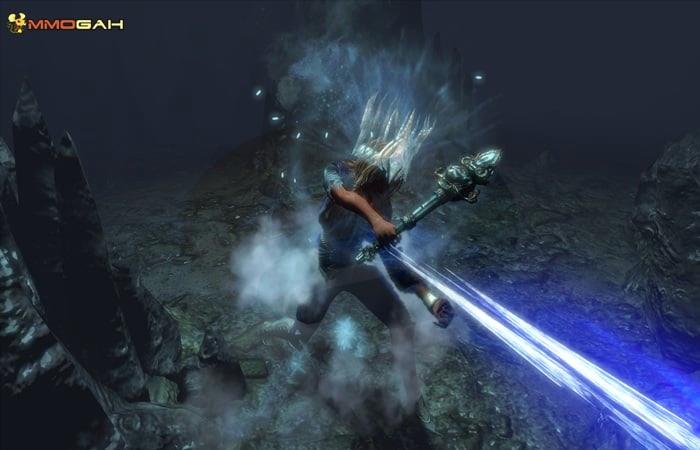
Leap Slam exemplifies mobility-melee hybrid gems, propelling your character through the air to crash down with area damage and knockback potential. This Marauder-favored ability requires melee weapons and substantial Strength investment, making it ideal for closing distances while controlling enemy positioning.
Molten Strike combines precise single-target engagement with explosive area coverage. The initial melee attack triggers magma projectiles spreading across a 270-degree arc with 5-20 unit radius. This dual-phase mechanics allows both boss damage and crowd control, enhanced further through projectile-focused support gems.
Spectral Throw replicates Thor’s hammer technique, hurling your weapon as a piercing projectile that returns automatically. With 100% innate pierce chance, this skill benefits tremendously from Multiple Projectiles support and damage modifiers, creating devastating area coverage.
Decoy Totem provides strategic defense through enemy distraction. Augmenting it with Increased Totem Life significantly extends its durability, creating safe windows for casting channeled abilities or repositioning. This utility gem proves invaluable in difficult encounters where survival depends on controlling enemy aggression.


Action Checklist
- Identify your core skill gems and prioritize their leveling through constant equipment
- Acquire support gems that complement your primary skills through quests and vendors
- Secure at least one 4-linked item for basic support gem combinations
- Optimize skill bar layout with frequently used abilities on easily accessible keybindings
- Experiment with different gem combinations in various socket links to discover synergistic effects
No reproduction without permission:GameCDjnh » Skill Gems in Path of Exile Master Path of Exile skill gems with expert strategies, optimization tips, and common pitfalls to avoid