
TL;DR
- Achieve 40 Atlas points to unlock critical farming nodes for optimal currency generation
- Prioritize Treasure Cores, Precursor Influence, and Enigmatic Intensifications for maximum map rewards
- Focus on Rising Danger and rare monster nodes as they provide the highest loot value per point
- Combine shrine mechanics with Speed Shrines for dramatically improved clear speed
- Avoid problematic nodes like Corrupted Infusion and Ecological Shift that reduce efficiency
When advancing through Path of Exile 2’s endgame content, optimizing your Atlas point allocation becomes crucial for maximizing currency acquisition. A well-structured Atlas configuration unlocks substantial opportunities to amplify rewards, streamline map progression, and optimize your overall farming efficiency in the late game.
This comprehensive guide examines essential strategies for endgame Atlas farming, identifies the most valuable nodes to prioritize, and explores proven methods to significantly boost currency drops. Whether you’re an experienced veteran or newly entering the Atlas endgame phase, these insights will refine your approach and elevate your gameplay performance.
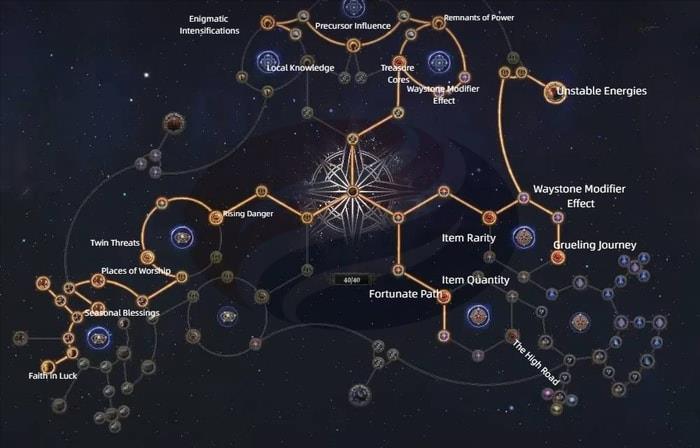
Delving into advanced Atlas farming techniques requires understanding the importance of reaching the 40-point threshold. This benchmark enables access to the most impactful passive nodes that dramatically improve farming efficiency and return on investment.
Many players underestimate the strategic importance of proper Atlas planning, often wasting valuable points on suboptimal nodes that provide minimal returns. The difference between a well-optimized Atlas and a haphazard allocation can result in 30-50% variance in currency acquisition rates, making informed decisions essential for progression.
Primary Atlas Investment Targets
Begin your optimization by targeting the upper cluster containing Treasure Cores, Remnants of Power, Precursor Influence, and Enigmatic Intensifications. These nodes deliver exceptional value for farming-focused builds.
• Treasure Coves: This node substantially improves both the quantity and quality of magic and rare chests, leading to significantly enhanced map rewards. It’s particularly effective for players specializing in chest-focused farming strategies, enabling more consistent acquisition of valuable items and currency in PoE 2’s economy.
• Precursor Influence: Dramatically increases your tablet drop frequency, which are essential components for “juicing” your maps. Consistently applying these tablets in towers provides a reliable method for amplifying map rewards.
• Remnants of Power: Provides a consistent 20% chance for double effects on tablets within your maps, substantially improving both quantity and quality of rewards.
• Enigmatic Intensifications: Enhances explicit modifiers on waystones based on the number of towers affecting the map area. Maintaining at least three active towers ensures maximum bonus potential, making this node exceptionally valuable.
Local Knowledge: Exercise caution with this node, as it performs optimally in specific biomes including Grass, Swamp, or Water environments. Conversely, venturing into alternative biomes such as mountains or deserts will substantially reduce currency acquisition rates. While respeccing in and out is technically possible, the process can become cumbersome, requiring careful advance planning.
Waystone Modifier Effect: This passive provides notable benefits, and while skipping these two points is an option, they generally represent worthwhile investments due to the limited availability of impactful small passives.
Unstable Energies: A crucial node that amplifies both prefix and suffix modifiers on waystones by 25%. Prefixes enhance map bonuses including rarity, quantity, and pack size, while suffixes may introduce additional map challenges. Ensure your character build can effectively manage the difficulties that suffixes introduce to maximize currency generation potential.
Grueling Journey: Progressing downward, prioritize nodes concentrating on explicit modifiers, such as Grueling Journey and adjacent waystone-related passives. Explicit modifiers represent one of the most effective methods for map enhancement. While certain rarity-focused nodes offer minor improvements (typically around 3% increased rarity), they deliver substantially less impact compared to explicit modifiers.
Fortunate Path: Moving leftward, consider allocating points to Fortunate Path, which grants a 100% increased rarity for waystones discovered in maps. This approach conserves currency by reducing dependency on items like regals and exalted orbs for modifier enhancement. Additionally, Item Quantity-related nodes might warrant consideration, though explicit modifiers generally provide more consistent value.
The High Road: This node can provide higher-tier waystones for progression phases, though its primary benefits manifest during early development stages. Since most drops naturally occur at tier 15, concentrating farming efforts at this tier maximizes efficiency. Advancing toward the Atlas’s left sector, prioritize Rising Danger, which increases rare monster density on maps by 50%. This node represents an essential selection for optimizing farming effectiveness.
Secondary Optimization Strategies
Transitioning to the left Atlas quadrant reveals additional critical passives that substantially contribute to farming optimization.
Rising Danger: Maximizing rare monster density within your maps represents the cornerstone strategy for increasing valuable loot acquisition. Rare monsters serve as the primary source of premium items throughout the game, and augmenting their population positively influences complementary mechanics, including Bridge encounters. To implement this strategy effectively, prioritize Rising Danger, which elevates rare monster counts by 15%. Combined with supplementary nodes like Rare Packs (providing an additional 5% increase), the cumulative effect reaches 20%, delivering substantial advantages in loot generation.
Twin Threats: Another significant node is Twin Threats, which duplicates one rare monster within your maps. While not revolutionary, it represents a more consequential choice compared to marginal 3% pack size increases. Collectively, these strategic point allocations guarantee your maps produce superior rewards and enhance overall farming efficiency.
Places of Worship: Following these selections, progress leftward through the Atlas to unlock Places of Worship, which grants your maps a 100% increased probability of containing shrines. Shrines deliver powerful temporary enhancements, including Seasonal Blessing, which extends duration and amplifies the effects of shrine bonuses. Additionally, Seek Shrines provide item rarity bonuses, though their spawn frequency remains relatively low, introducing an element of variability to this selection. Despite this uncertainty, selecting Prayer for Guidance (ensuring a 100% increased chance for shrines to manifest as Seek Shrines) proves worthwhile, as shrines frequently yield valuable rewards.
For additional optimization, incorporate Faith in Luck, which provides a 25% probability for shrines to gain additional effects. This node heightens the likelihood of Speed Shrine appearances, dramatically accelerating farming velocity. Integrating Speed Shrines with Seek Shrines—particularly when combined with speed enhancements—produces streamlined map clearing and accelerated loot collection.
Understanding the synergy between monster density and shrine mechanics represents a critical advancement in farming strategy. Players who master these combinations typically achieve 40-60% faster clear times while maintaining comparable or improved loot quality, creating a substantial efficiency advantage over less optimized approaches.
Alternative Farming Approaches
Strongbox Integration
Another viable consideration involves Strongboxes, which could represent a valuable addition to your overall strategy. If you opt to incorporate Strongboxes into your farming approach, consider nodes such as Hidden Hoards for additional rare monster packs.
Rogue Exiles Assessment
Many players inquire about the rationale for excluding Rogue Exiles from optimized setups. The current implementation of Rogue Exiles delivers exceptionally limited profitability. The probability of acquiring anything beyond occasional random rare items remains remarkably low.
Spirits & Essences Evaluation
Another frequent question concerns the viability of farming Essences and Spirits. Regarding spirits, their present impact remains minimal. Consequently, allocating points toward spirit-related nodes offers limited value.
Concerning essences, current performance metrics have proven disappointing. While essences might represent an option for players with specific interests or those engaged in solo self-found gameplay, my general recommendation emphasizes concentrating on Shrines and substantially enhancing your maps. This methodology frequently yields superior rewards and bonuses compared to essence-focused farming strategies.
Corrupted Infusion Analysis
One Keystone warranting discussion for endgame mapping is Corrupted Infusion, which causes Corrupted Waystones to undergo re-corruption when traversed. While Corrupted Waystones can provide beneficial bonuses including increased rarity, quantity, or pack size, implementing Corrupted Infusion permits these bonuses to be overwritten and effectively compromised. This introduces substantial risk, as it can degrade even premium maps. For these reasons, this node receives no recommendation. Furthermore, investing in Corrupted Infusion demands at minimum five points, representing significant expenditure. While the modifiers and potential supplementary monster packs don’t inherently possess negative qualities, the associated risks and point investment outweigh potential benefits. Therefore, consistently avoid selecting this Keystone within your configuration.
Ecological Shift Assessment
The final node requiring examination is Ecological Shift, which grants maps a 40% increased probability of containing random additional content while simultaneously reducing monster pack quantities by 20%. This node presents substantial problems. Reduced monster packs result in diminished overall monster counts, representing a significant disadvantage. Despite the 40% increased chance for random supplementary content (including shrines, boxes, essences, Rogue Exiles, and spirits) might initially appear attractive, the content provided frequently proves underwhelming. Even accounting for multiplicative effects, the potential advantages fail to justify the inherent drawbacks.
If you seek deeper comprehension of these strategic approaches and desire clear visual explanations, consult the video below. It delivers more comprehensive guidance and practical implementation techniques.
For players transitioning from other action RPGs or seeking to optimize their character builds, understanding these Atlas mechanics proves equally crucial as selecting optimal equipment configurations. The strategic allocation of Atlas points frequently determines whether players achieve consistent endgame success or experience frustrating progression plateaus.
Action Checklist
- Achieve 40 Atlas points minimum before implementing advanced farming strategies
- Prioritize Treasure Cores, Precursor Influence, and Enigmatic Intensifications as primary investments
- Allocate points to Rising Danger and complementary rare monster nodes
- Implement shrine strategy with Places of Worship and Faith in Luck
- Avoid Corrupted Infusion and Ecological Shift due to significant efficiency penalties
No reproduction without permission:GameCDjnh » How to Use Atlas Tree to Farm More Divine Orbs – PoE 2 Farming Guide Master PoE 2's Endgame Atlas with strategic node prioritization for maximum currency farming efficiency