
Master curve throws in Knockout City with advanced techniques, timing strategies, and competitive advantages
Understanding Curve Throw Mechanics
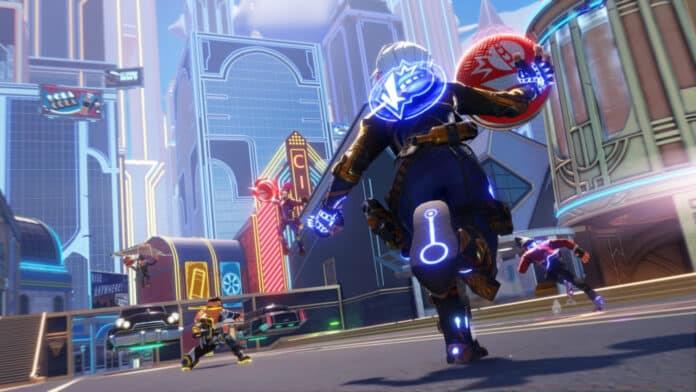
Knockout City represents a dynamic team-based dodgeball experience crafted by Velan Studios and distributed through EA’s Originals program. This high-energy title delivers cross-platform accessibility across PlayStation 4, PlayStation 5, Xbox One, Nintendo Switch, Xbox Series X/S, and Windows PC systems. The gaming community has enthusiastically embraced this title, awarding it perfect 10/10 ratings on Steam. Among its sophisticated mechanics, the curve throw stands out as an essential skill that separates novice players from competitive veterans.
Curve throws introduce a tactical dimension that fundamentally alters engagement dynamics. When executed correctly, these arcing shots travel along curved trajectories that bypass conventional defensive positioning. This technique proves particularly valuable against opponents who have mastered straight-line throw anticipation and defensive maneuvers.
The strategic advantage of curved pathways cannot be overstated in high-level play. While most competitors prepare for direct assaults, well-timed curve throws exploit peripheral vision limitations and reaction time constraints. This creates opportunities for unexpected hits that can quickly shift momentum during intense matches.
Executing Perfect Curve Throws
The foundation of successful curve throwing begins with proper charging technique. Initiate the process by holding the throw button to accumulate power, indicated by visual and audio cues. Optimal charging duration typically ranges between 1-2 seconds, depending on your distance from the target and the specific ball type you’re using.
- Begin by firmly charging your throwing action to maximum capacity.
- Execute either a spin jump or double jump maneuver while simultaneously directing the ball’s trajectory.
- Release the throw mid-movement to create the distinctive curved ball pathway toward your intended target.
Movement execution requires precise timing coordination. The spin jump technique involves rotating your character 180-360 degrees during the jump sequence, while double jumping provides vertical elevation that naturally creates arcing trajectories. Advanced players often combine both techniques for maximum unpredictability.
Ball manipulation represents the final component of mastery. As you initiate your jump, subtly adjust your movement stick or keys to influence the ball’s curvature. Right-handed curves require clockwise movement during release, while left-handed curves demand counterclockwise input. The intensity of your directional input directly affects the sharpness of the curve.
Advanced Strategies and Timing
Psychological warfare plays a crucial role in curve throw effectiveness. Observe your opponents’ defensive patterns during early engagements. Many players develop predictable dodging rhythms that can be exploited with well-timed curve attacks. The most successful practitioners alternate between straight and curved throws to keep adversaries uncertain.
Environmental positioning significantly enhances curve throw potential. Utilize map geometry to create unexpected angles—shooting around corners, over obstacles, or using elevated positions to increase the arc’s effectiveness. Certain maps feature specific hotspots where curve throws become particularly devastating due to sightline limitations.
Team coordination transforms curve throws from individual techniques to strategic weapons. Coordinate with teammates to create distraction patterns—while one player engages directly, another can execute curve throws from flanking positions. This divide-and-conquer approach often results in quick eliminations against even the most skilled opponents.
Timing represents the final mastery component. Release your curve throws during opponent reload animations, dodging recovery periods, or when they’re focused on other teammates. These brief vulnerability windows dramatically increase hit probability and conserve valuable ball resources.
Common Mistakes and Optimization
Many players struggle with curve throws due to fundamental timing errors. Releasing the throw too early during the jump often results in minimal curvature, while delayed releases can send the ball off-target. Practice the exact moment of release during training sessions to develop muscle memory.
Movement overcomplication represents another frequent pitfall. Beginners often attempt exaggerated spinning maneuvers that sacrifice accuracy for style. Focus initially on consistent, controlled movements before incorporating advanced techniques. The most effective curve throws often utilize subtle, precise movements rather than dramatic flourishes.
Strategic misapplication diminishes curve throw effectiveness. While these techniques excel against stationary or predictable targets, they’re less reliable against highly mobile opponents using evasive patterns. Learn to identify when curve throws provide tactical advantages versus when straightforward attacks prove more efficient.
Recommended | Understanding Knockout City’s free-to-play accessibility options
Consistent practice remains the ultimate optimization method. Dedicate time in training modes to master various curve intensities and distances. Record your successful attempts to identify patterns and refine your technique. With persistent effort, curve throws will become instinctive components of your tactical arsenal.
No reproduction without permission:GameCDjnh » How to curve your throw in Knockout City? Master curve throws in Knockout City with advanced techniques, timing strategies, and competitive advantages