
TL;DR
- MMR is Valorant’s hidden skill rating that determines your true competitive standing
- Your visible rank often lags behind your actual MMR, creating progression opportunities
- Monitor RR gains/losses patterns to estimate your hidden MMR accurately
- MMR decay occurs during extended breaks, requiring strategic return gameplay
- Consistent performance against higher-ranked opponents accelerates MMR growth
Valorant stands as one of the most intensely competitive tactical shooters in the gaming landscape, drawing millions of players worldwide who strive to ascend through its meticulously designed ranking hierarchy. The game’s blend of precise gunplay, strategic ability usage, and team coordination has cemented its position as an esports powerhouse, appealing to recreational competitors and aspiring professionals seeking to master its competitive ecosystem.
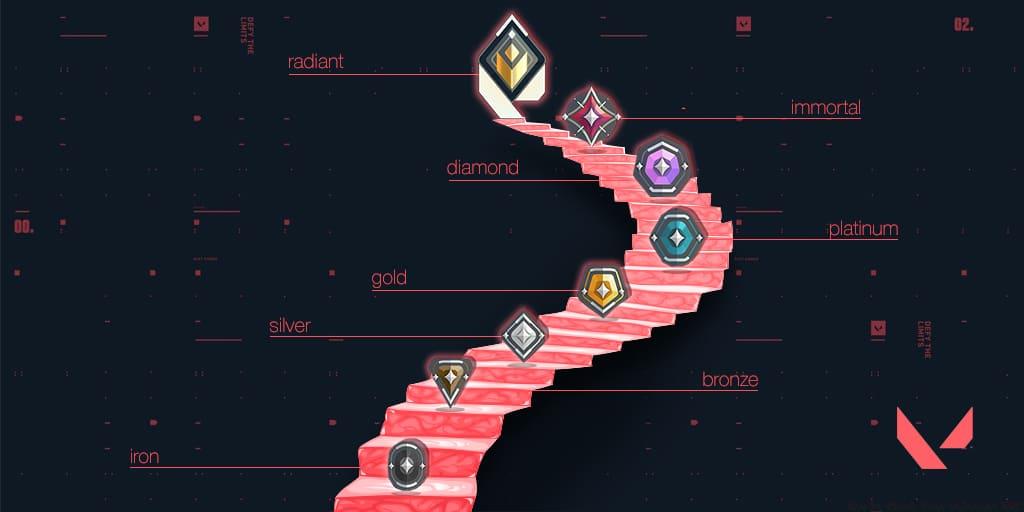
Fundamentally, your displayed rank in Valorant serves as a visual indicator of your current competitive standing. Your achievements within the Competitive game mode determine your classification among the nine primary skill tiers: Iron, Bronze, Silver, Gold, Platinum, Diamond, Ascendant, Immortal, and the prestigious Radiant echelon. With the exception of Radiant, every tier partitions into three distinct subdivisions that provide granular progression milestones.
However, Valorant’s ranking architecture operates with considerably more complexity than surface appearances suggest. The emblem displayed on your profile frequently fails to represent your genuine competitive capabilities. This discrepancy underscores why comprehending your Matchmaking Rating (MMR) proves essential for meaningful rank advancement.
In practical terms, your Valorant MMR constitutes a concealed numerical value that precisely quantifies your performance within the game’s competitive environment. Riot Games deliberately keeps this metric hidden from players, who instead interact with the visible rank tier system as their primary progression indicator.
This underlying MMR adjusts dynamically according to your competitive match performances. Consistently outperforming players within your current skill bracket will elevate your MMR, whereas underwhelming performances against lower-ranked opponents will depress it. The system evaluates not merely victory or defeat but your individual contribution relative to expected performance benchmarks.
Extended absences from Valorant trigger MMR decay, a mechanism where your hidden rating gradually diminishes during periods of competitive inactivity. This prevents players from maintaining artificially high MMR without ongoing demonstration of skill, though your visible rank may remain unchanged until you resume playing.
Understanding these mechanics becomes particularly valuable when examining broader tactical shooter ecosystems. For comprehensive insights into competitive gaming systems, our Complete Guide explores similar ranking architectures across different titles.
Although Riot Games provides no official method for players to precisely determine their MMR in Valorant, you can develop a reasonably accurate estimation by meticulously analyzing your Rank Rating (RR) fluctuations following competitive matches. This analytical approach reveals crucial insights about your hidden standing within the matchmaking system.
Generally, when your concealed MMR exceeds your current visible rank, the system attempts to accelerate your progression by awarding increased Rank Rating (RR) for victories while minimizing RR deductions from defeats. This creates a noticeable pattern where you might gain 25-30 RR for wins while losing only 15-18 RR for losses, indicating the system recognizes your superior capabilities relative to your rank tier.
Conversely, if your MMR falls below your current rank, you’ll experience the opposite pattern: diminished RR gains from victories (perhaps 15-18 RR) and amplified RR losses from defeats (25-30 RR). This signals that the system considers you underperforming for your rank and attempts to adjust your position downward.
Multiple additional factors influence your RR adjustments, including individual performance metrics (combat score, ability usage efficiency), round differentials (whether matches were close or one-sided), and your performance relative to team expectations. However, maintaining consistent awareness of your RR gain/loss patterns provides the most accessible method for approximating your actual MMR position.

Advanced MMR Tracking Strategies:
Seasoned competitors employ several sophisticated techniques to monitor their MMR progression. Maintaining a detailed match log that records RR changes, opponent ranks, and personal performance statistics enables pattern recognition over time. Many players discover that consistently performing well against opponents ranked one tier above their current placement significantly accelerates MMR growth.
Third-party analytics platforms like Tracker.gg offer additional insights by comparing your performance metrics against population averages, though these cannot access your actual MMR. They can highlight whether your statistics align with players in higher ranks, suggesting your MMR may be poised for advancement.
Common MMR Estimation Mistakes:
Many players erroneously focus exclusively on win/loss ratios while ignoring performance quality. The system differentiates between barely winning against lower-ranked opponents and decisively defeating higher-ranked teams. Similarly, narrowly losing to superior opponents often penalizes MMR less than struggling against inferior competition.
Another frequent error involves overreacting to short-term RR fluctuations. MMR calculations consider extended performance trends rather than isolated matches. A single disappointing game following numerous strong performances typically has minimal impact on your underlying rating.
For players seeking to optimize their competitive approach across different roles, our Class Guide provides valuable insights into specialization strategies that can enhance performance consistency.
Action Checklist
- Document RR gains/losses for 10 consecutive matches to establish baseline patterns
- Compare your performance statistics against players one rank tier above your current placement
- Identify whether you consistently gain more RR for wins than you lose for defeats
- Analyze your combat score and ability efficiency in victories versus defeats
- Develop consistent warm-up routines to maintain performance standards across sessions
No reproduction without permission:GameCDjnh » How To Check Your Valorant MMR? Master Valorant's hidden MMR system to climb ranks faster with practical tracking methods and strategic insights