
Mastering Counter-Strike’s economy system for competitive advantage and strategic gameplay
Understanding the Core Economy Mechanics
The economic framework in Counter-Strike represents a fundamental gameplay component that directly influences strategic decisions. Participants initiate each match with a predetermined capital allocation, typically beginning at $800, though this initial amount can be adjusted through custom server configurations. Throughout match progression, players accumulate additional funds based on performance metrics and round outcomes, with the absolute maximum financial ceiling established at $16,000 per competitor.
This monetary system functions as the decisive competitive mechanism that demands thorough comprehension from all participants, ranging from casual enthusiasts to professional competitors. Understanding economic flow patterns enables players to make informed purchasing decisions, coordinate team-wide financial strategies, and maintain competitive viability throughout extended match sequences.
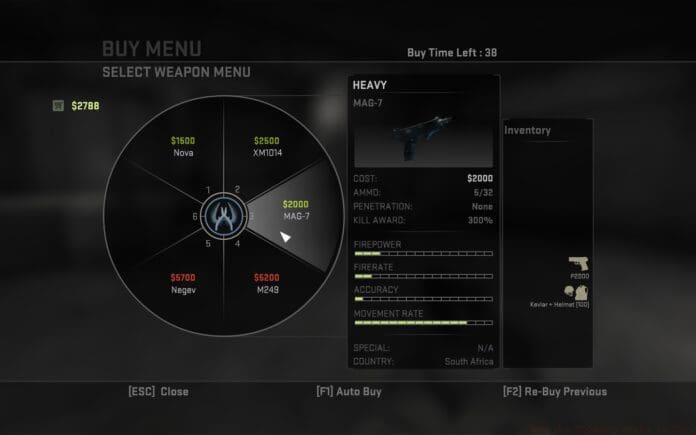
Weapon Kill Rewards Breakdown
Strategic weapon selection extends beyond combat effectiveness to include economic considerations through kill reward differentials. Submachine guns generally provide $600 per elimination in competitive environments, with the P90 representing the sole exception at only $300 per kill. Shotgun category weapons typically yield $900 per successful elimination, though the XM1014 provides merely half this amount at $450 per kill.
- Melee attacks with knives grant the highest individual reward at $1500 in competitive matches
- Pistol category weapons uniformly provide $300 per elimination excepting the CZ75-Auto, which only awards $100 per kill
- Rifle class weapons generally offer $300 in competitive and $150 in casual modes per kill, with the AWP sniper rifle representing the exception at $100 competitive and $50 casual rewards
These reward structures significantly influence weapon selection strategies, particularly during economic disadvantage phases where maximizing kill value becomes crucial for financial recovery. Advanced players frequently prioritize weapons with superior economic returns when facing budget constraints.
Round Structure and Economic Flow
Valve’s official matchmaking system incorporates a preliminary Warmup Round where all connected participants receive the maximum $16,000 allocation while additional players continue joining. This initial phase operates as an unrestricted team deathmatch format featuring timed respawn mechanics within fixed team spawning locations, requiring participants to purchase equipment and firearms while none of the acquired funds transfer to the official match commencement.
The inaugural official round, commonly designated as the pistol round, initiates with both competing factions receiving $800 base funding in competitive environments. Victorious teams obtain $3250 for time expiration victories or complete enemy team elimination, while successful bomb detonations or defusions yield $3500 rewards. Defeated teams receive escalating compensation based on consecutive round losses:
- Initial round defeat: $1400 compensation
- Two consecutive losses: $1900 compensation
- Three consecutive losses: $2400 compensation
- Four consecutive losses: $2900 compensation
- Five or more consecutive losses: $3400 compensation
This progressive loss bonus system prevents economically disadvantaged teams from falling into unrecoverable financial situations, maintaining competitive balance throughout extended match sequences.
Advanced Economic Strategies
Terrorist faction members receive an additional $800 economic bonus when successfully planting the explosive device despite ultimately losing the round, supplementing the standard loss compensation values. This mechanic encourages objective-focused gameplay even during economically disadvantaged situations, potentially transforming round outcomes through strategic bomb placement.
Unique temporal conditions affect economic distributions when Terrorists lose rounds through time expiration. Surviving Terrorist players forfeit round-end monetary compensation while retaining currently equipped weapons, whereas surviving Counter-Terrorist operatives still receive financial rewards despite round loss. This asymmetric reward structure occasionally creates scenarios where players may perish after round conclusion but before subsequent round commencement, resulting in both weapon retention forfeiture and economic compensation denial.
The game mechanics deliberately discourage tactical self-elimination by denying round-end compensation to players who commit suicide, preventing kill denial strategies against opposing teams. When rounds conclude through objective completion by the opposing faction, all defeated players receive standard round-end compensation regardless of survival status. Individual participants receive $300 bonuses for both bomb defusions and plantings, with the latter achievable even after round victory to secure additional economic advantages.
No reproduction without permission:GameCDjnh » How the Economy works in CSGO Mastering Counter-Strike's economy system for competitive advantage and strategic gameplay