
TL;DR
- Master inventory sorting and party mechanics early to accelerate progression
- Develop multiple income streams through quests, crafting, and targeted farming
- Complete sub-job quest at level 18 and maintain gear quality consistently
- Progress through seven distinct level brackets with specific goals for each phase
- Unlock artifact gear at 40+ and prepare for Maat fight at 70
- Transition to merit point system post-75 for character customization
Final Fantasy XI presents an expansive world with countless possibilities for character development and adventure. While advancing your chosen profession remains the core objective, the game offers numerous pathways for exploration and specialization. This complexity can overwhelm newcomers, making strategic planning essential for efficient progression.

This comprehensive guide targets both novice adventurers and returning veterans seeking to optimize their journey. We focus on essential career milestones while excluding niche activities like HELM-ing, Garrison, Ballista, gardening, Dynamis, farming, fishing, and Chocobo digging. It’s assumed you’ve already selected your starting nation, race, and primary occupation.
Your advancement capability directly correlates with current job level, though certain activities demand ongoing attention regardless of progression stage. Beginning these efforts early and maintaining consistent engagement will significantly enhance your long-term success.
Final Fantasy XI features diverse employment options requiring careful consideration during character creation. You’ll select Server, Starting Nation, Gender, Job, and Race—decisions that shape your entire gaming experience. Server selection matters primarily for playing with friends; otherwise, most servers offer comparable experiences.
Race and gender choices carry permanent consequences since they cannot be altered post-creation. Starting fresh with a new character becomes necessary if you wish to modify these attributes later. After nation selection, you’ll view an introductory cinematic followed by spawning in your chosen homeland.
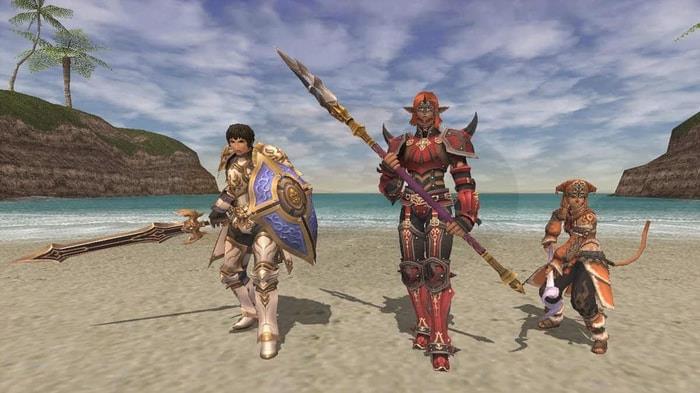
The characters interacting with you initially are NPCs (non-player characters) providing essential guidance. Pay close attention to their dialogue and respond appropriately to their inquiries. Completing this introductory sequence properly introduces you to your nation’s culture and establishes foundational gameplay understanding.
World Pass requirements have been eliminated in modern FFXI—you can directly select your preferred server from the available list during character creation.
-
- Efficient inventory management becomes crucial as your possessions rapidly accumulate. Organization simplifies dramatically through auto-sorting: Access your menu (typically the – key on PC), navigate to “Items,” then press the numeric keypad’s + button, select “Auto,” confirm with Enter, and your inventory reorganizes systematically.
- Party formation typically begins around level 10, marking the transition from solo play to cooperative combat. Group expeditions represent the primary leveling method in Final Fantasy XI, with Valkurm Dunes serving as the predominant gathering spot for levels 10-20.
- Communication often involves receiving “tells” containing “PT?” or “Team up?”—both indicating party invitations.
- The auto-translation system facilitates global communication through colored symbols surrounding specific terms. This integrated translation mechanism supports English, French, Japanese, and German languages seamlessly.
- Auto-translated text displays at screen top when you input phrases like “Hello” followed by Tab key activation.
- Post-combat recovery utilizes /heal command or Ctrl+H shortcut, though situational awareness remains critical when executing healing actions.
Establishing reliable income streams proves essential for sustained character development. Leveling any profession demands both time investment and financial resources. While monster drops provide some revenue, they rarely suffice for comprehensive gear upgrades and consumable expenses.
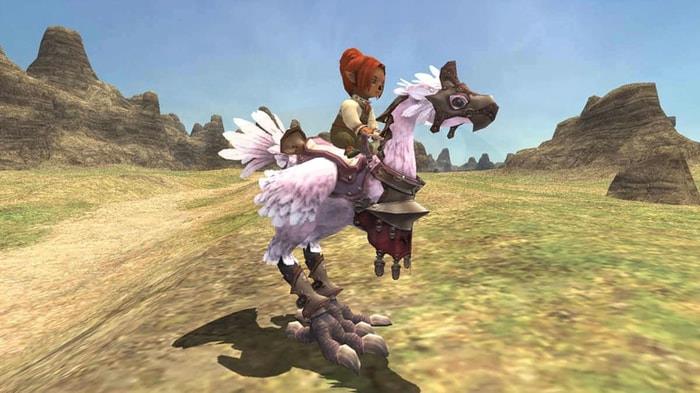
- Systematic quest completion builds hometown reputation while rewarding valuable items and currency. Expanding to other cities’ missions at higher levels diversifies rewards. Some players supplement earnings through third-party Gil purchases, though this carries potential risks.
- Understanding item valuation transforms loot management—some drops command premium prices while others hold minimal worth. Beastman seals should always be retained for future high-value exchanges.
- Maintaining current-tier weaponry and armor represents non-negotiable progression requirements. Damaged equipment severely compromises party viability and combat effectiveness.
- Strategic sub-job selection and leveling significantly enhance primary job capabilities. Acquire your sub-job skill, then diligently level this secondary profession to half your main job’s level for optimal performance.
1. Foundation Building: Levels 1-15
The initial 15 levels function as an extensive orientation to your chosen profession, its inherent abilities, and core game systems. These early stages progress rapidly due to minimal experience requirements, favorable combat matchups against DC, EM, and T-rated monsters, and reduced experience penalties upon death. Reaching level 75 requires 801,350 total EXP—levels 1-15 contribute 28,350 EXP (approximately 3.5% of total).
2. Social Integration: Levels 15-20
Solo play becomes increasingly challenging around level 15, with noticeable increases in downtime, combat complexity, risk exposure, and reduced hourly experience gains.
This transition period necessitates group formation, ideally comprising 5-6 members. Prioritize completing your sub-job activation quest and obtaining Chocobo licensing for enhanced mobility. Levels 15-20 add 20,000 EXP, bringing cumulative total to 48,350 (roughly 6% toward cap).
3. Accelerated Advancement: Levels 20-40
These twenty levels represent the most rewarding progression phase, introducing most job abilities, beneficial tools, and spell acquisitions while maintaining rapid leveling pace.
Critical objectives include reaching Khazam and securing your Nationwide Airship Pass, expanding travel capabilities beyond Chocobo access and unlocking advanced professions. Many players level specific sub-jobs to 37 for optimal primary job support. Levels 20-40 contribute 114,700 additional EXP (20% of level 75 requirement).
4. Artifact Acquisition: Levels 40-60
This stage centers around obtaining your artifact weapon and armor set (free high-quality gear) and initiating the Genkai series—five sequential limit-breaking encounters. Levels 40-60 provide 195,500 EXP, elevating cumulative total to 358,550 (slightly under 45% to cap).
5. Persistence Phase: Levels 60-70
This represents the most demanding leveling segment with limited notable developments. Party recruitment becomes more challenging, leveling pace slows considerably, and solo play approaches impracticality.
Compensation includes acquiring your second artifact (relic) armor set at 65 and unlocking Dynamis access—premier endgame content. The remaining 234,000 EXP brings total to 611,350 (76% completion).
6. Capstone Preparation: Levels 70-75
Final character customization occurs during these culminating levels. Focus shifts toward endgame equipment—costly but permanent upgrades. Macro optimization becomes mandatory. Defeating Maat (Genkai 5) before 71 proves essential—this solo encounter validates your job mastery.
7. Post-Cap Enhancement: Beyond Level 75
The merit system unlocks additional progression pathways post-level cap. While job level remains fixed, you can enhance traits, abilities, and add supplementary spells. Toggling merit mode exchanges EXP for Limit Points (10,000 LP = 1 Merit Point), enabling character refinement through hundreds of thousands of accumulated points.
Sub-job optimization requires strategic planning—select complementary professions that enhance your primary role’s strengths. Warrior pairs excellently with physical damage dealers, while White Mage provides healing support across multiple jobs. Understanding class synergies dramatically improves combat effectiveness and party desirability.
Artifact gear acquisition at level 40+ represents a significant power spike with minimal investment. These sets often remain relevant for dozens of levels, making their acquisition a top priority upon reaching the appropriate level threshold.
The merit point system enables deep character customization post-75. Prioritize enhancements that align with your preferred playstyle—melee-focused characters benefit from strength and accuracy merits, while casters should prioritize magic accuracy and spell potency.
Economic sustainability demands diversification beyond monster farming. Crafting professions, when leveled strategically, can generate substantial income through high-demand consumables and equipment. Our complete progression guide offers detailed strategies for maximizing profitability across various market segments.
Gear maintenance proves critical—regular upgrades and repairs prevent performance degradation. Consult our equipment optimization resources for current meta recommendations and upgrade pathways.
This strategic framework provides the essential foundation for FFXI mastery. While not exhaustive, following these milestones ensures systematic progression toward endgame readiness and character optimization.
Action Checklist
- Complete character creation with long-term viability in mind—consider race stats and job compatibility
- Master inventory auto-sort and basic communication commands
- Begin party participation at level 10+ in Valkurm Dunes
- Complete sub-job quest at level 18 and obtain Chocobo license
- Establish multiple income streams through quests, crafting, and targeted farming
- Acquire artifact gear at level 40+
- Prepare for and defeat Maat between levels 70-71
No reproduction without permission:GameCDjnh » Guide for FFXI New/Returning Players Essential FFXI progression guide with strategic milestones, party tips, and gear optimization for new adventurers