
TL;DR
- Update 20 introduces undo/redo (200 steps) and item linking (50 items) for housing
- Platform release staggered: PC/Mac available now, consoles November 6
- Linking enables moving entire scenes while maintaining individual item control
- History tracking provides comprehensive change monitoring during decorating sessions
- Advanced workflows include sub-group organization and collaborative scene building
Update 20 launches alongside the Murkmire DLC as a complimentary base-game enhancement. The patch is currently accessible on PC/Mac platforms, with PlayStation®4 and Xbox One versions scheduled for deployment on November 6. This significant Elder Scrolls Online release delivers crucial quality-of-life upgrades for Tamriel‘s dedicated home designers. Discover comprehensive strategies for optimizing your furnishing management in this detailed analysis.
Platform timing variations mean console players should prepare for the November 6 rollout by planning their decorating projects in advance. The staggered release allows PC users to test and provide feedback that often improves the console experience.
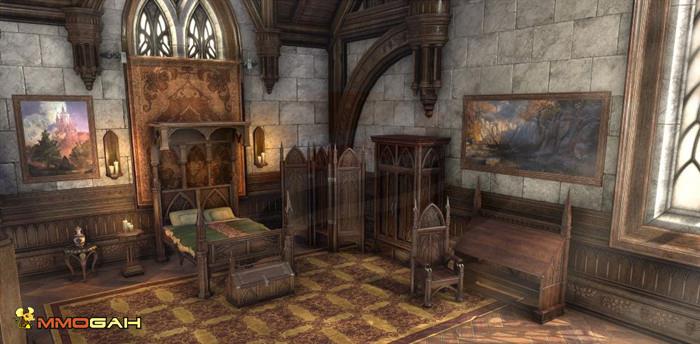
ENHANCED EDITING CONTROL
The revolutionary undo and redo capability empowers you to immediately reverse or reinstate modifications made during home furnishing operations. During decoration sessions, you can now backtrack through 200 sequential actions within a single working period, enabling restoration to virtually any prior configuration state. The undo mechanism automatically returns displaced furnishings to your inventory system—streamlining the entire process.
“Frequently, when entering a newly acquired residence (particularly pre-furnished variants), I appreciate the existing arrangement and hesitate to make alterations,” notes Cullen Lee, a principal Systems Designer for ESO. “However, with the new functionality, if my repositioning decisions prove unsatisfactory, I can simply revert to the original layout.”
Professional decorators recommend utilizing the history feature to experiment with bold design choices without permanent consequences. Common errors include forgetting to save complex arrangements before testing radical changes and exceeding the 200-step buffer during extended sessions.
The innovative linking system enables connection of item clusters to facilitate complete scene relocation. Previously, transferring multi-element arrangements required individual component manipulation, but current functionality permits selection of a primary “parent” object linked to 50 secondary “child” elements, moving the entire assembly simultaneously. You can designate specific “children” and attach additional objects to establish sub-group hierarchies for simplified editing workflows.
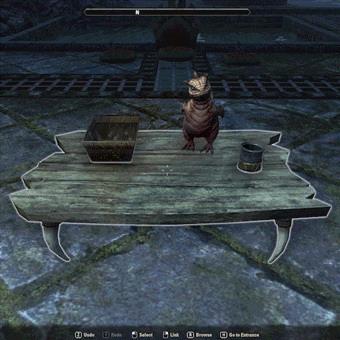
When positioning your cursor over any furnishing, activate the Link interface to designate pairing relationships. Moving the initial parent object transports all connected elements, while individual child items remain fully adjustable without disrupting the overall composition integrity.
“The linking implementation objective focused on enabling player creation adjustments without requiring individual furnishing manipulation,” clarifies Cullen. “Consider a gaming table configuration comprising 30+ discrete components forming the complete setup. Relocating them sequentially proves tedious and rarely achieves perfect alignment. Now, entire scenes transfer rapidly with precision accuracy!”
Advanced techniques include creating thematic sub-groups (like table settings, lighting arrangements, or decorative clusters) that can be toggled visible/invisible during complex projects. This approach significantly reduces visual clutter when working on intricate room designs.
Throughout your home development process, all recent modifications appear in a chronological “History” inventory, facilitating superior change monitoring and addition tracking. This feature proves particularly valuable for collaborative projects where multiple designers contribute to shared spaces, as it provides clear accountability for each alteration.
The history panel displays timestamps, user identification (in multi-person projects), and specific action descriptions. For extensive renovations, consider taking periodic screenshots before major changes to create visual references that complement the text-based history log.
OPTIMIZED WORKFLOW STRATEGIES
We recognize the ESO creative community excels at constructing elaborate, imaginative environments using the Housing Editor system. These enhancements empower more confident editor utilization, secure in the knowledge that every adjustment can be immediately reversed and sophisticated scenes effortlessly repositioned. Are you anticipating these Housing Editor transformations?
Professional decorators recommend starting with large structural items (walls, floors, major furniture) as parent objects, then linking decorative elements as children. This hierarchy prevents accidental displacement of foundational components while allowing decorative flexibility. For massive projects exceeding 50 items, create multiple parent groups organized by room section or functional category.
Time-saving technique: Use temporary “marker” items (inexpensive crates or barrels) as parent objects during initial layout phases, then replace them with permanent furnishings once the spatial arrangement is finalized.
Advanced positioning strategy: When creating multi-level scenes, establish separate linking groups for ground floor, elevated platforms, and ceiling elements. This layered approach facilitates independent adjustment of vertical elements while maintaining horizontal relationships.
Action Checklist
- Plan your decorating session by sketching layouts and identifying parent-child relationships for complex scenes
- Test undo/redo functionality with simple items before committing to complex arrangements
- Create thematic sub-groups for large projects (furniture, lighting, decorations)
- Establish hierarchical linking structures starting with large foundational items as parents
- Utilize history tracking to document major changes and create restoration points
No reproduction without permission:GameCDjnh » Build Better Homes with Update 20 of ESO Master ESO's new housing tools with expert tips for efficient home decorating and scene management