
TL;DR
- Ghost Rogue prioritizes evasion over damage, achieving 60%+ avoidance for elite soloing
- Warlock Tank combines pet damage transfer with demonic resilience for 70% damage reduction
- Shaman Tank utilizes hidden tanking talents in Enhancement tree for dungeon content
- Melee Hunter uses weapon weaving during ability cooldowns for DPS increases
- Smite Priest offers unparalleled PvP adaptability with hybrid healing/damage capabilities
Welcome to our comprehensive guide exploring WoW Classic’s most unconventional talent builds. While many players stick to established meta specifications, these five unique builds demonstrate how creative talent combinations can unlock unexpected gameplay possibilities beyond conventional roles.
Today we’re counting down five remarkable talent configurations that challenge traditional class expectations while remaining surprisingly effective in specific scenarios.
The Ghost Rogue represents a defensive reimagining of the traditional rogue playstyle. This build prioritizes survival mechanics over raw damage output, transforming the class into an elusive combatant capable of handling situations that would overwhelm standard builds.

This unconventional approach focuses on maximizing avoidance capabilities rather than offensive power. When leveling, this configuration proves remarkably efficient despite reduced damage numbers, excelling particularly at soloing elite enemies, managing multiple opponents, and surviving challenging encounters that would typically require group support.
The build’s signature ability, Ghostly Strike, provides a substantial 15% dodge chance increase for 7 seconds while delivering respectable damage. The visual effects add distinctive flair to combat animations while introducing unique rotational complexity.
Strategic weapon selection enhances this build’s effectiveness. Slower weapons synergize exceptionally well, delivering more substantial damage instances while further boosting dodge probabilities. With proper talent allocation, players can achieve approximately 60% total avoidance, dramatically reducing incoming damage during combat.

Against weapon-wielding enemies, this configuration delivers unexpected DPS enhancements through its 150% weapon damage modifier at minimal energy cost.
Mace Specialization introduces additional control through frequent stun procs. These free crowd control moments create damage-free windows where enemies remain incapacitated while you continue dealing damage. Around level 40, acquiring the “Work’s Third Leg” mace from auction houses provides exceptional value, delivering surprisingly high damage output for its cost.

2. Warlock Tank
The Warlock Tank build specializes in stacking maximum damage reduction capabilities supplemented by strategic self-healing mechanics. Through careful talent selection across two primary trees, players can accumulate approximately 70% damage reduction, creating an incredibly resilient character capable of soloing elite dungeon content for profitable farming.
This surprisingly robust tanking configuration relies on several key talents. Soul Link serves as the foundation, redirecting 30% of incoming damage to your pet instead. Master Demonologist further enhances survivability by reducing physical damage taken by an additional 10%, creating a baseline 40% damage reduction directly from talents alone.
These talent-based reductions stack multiplicatively with armor values and Demon Skin/ Demon Armor spells, creating exponential defensive benefits. The build’s versatility allows for both dungeon tanking and elite solo farming, though it requires bold playstyle adaptation to maximize effectiveness.
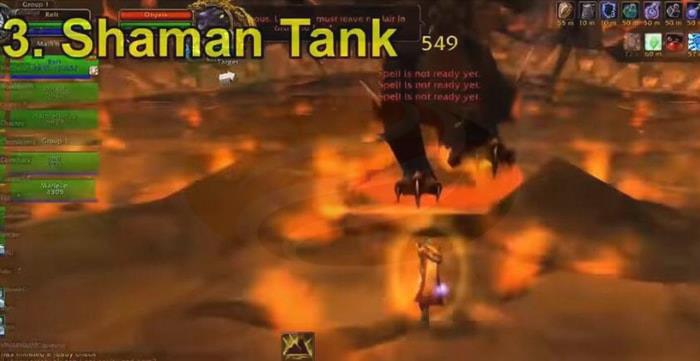
3. Shaman Tank
The Shaman Tank represents an entertaining yet functional build particularly effective for flag-carrying scenarios in PvP. Shamans possess naturally strong defensive capabilities through Ghost Wolf form and various protective talents, enabling surprisingly effective dungeon tanking performance.
Within temporary tanking situations and raiding environments, examining the Enhancement tree reveals unexpected tanking potential. Several talents feel reminiscent of warrior abilities, including Shield Specialization, Anticipation, Toughness, and Parry talents that collectively create substantial defensive fortification.
Historical context suggests shamans were originally conceptualized with tanking capabilities in mind. The foundation exists within their talent trees, requiring only minor adjustments and player skill to transform them into viable raiding tanks for specific encounters.

4. Melee Hunter
Melee Hunter configurations offer several distinct variations, including alternative leveling builds and specialized PvP setups. The most prevalent iteration, known as Melee Weaving Raid Build, has gained popularity among skilled players seeking DPS optimization.
This approach represents a legitimate method for enhancing damage output in raiding environments. Professional hunters consider this technique a measurable DPS improvement over standard raid builds.
The strategy capitalizes on natural downtime within hunter rotations. During these brief windows, players transition into melee range to execute Wing Clip or Raptor Strike attacks before returning to ranged combat positioning.

5. Smite Priest
The Smite Priest configuration delivers exceptional hybrid healing and damage capabilities. For League of Legends players, this build resembles Soraka’s playstyle, balancing substantial healing output with respectable damage contribution.
This versatile setup proves exceptionally valuable in PvP scenarios due to its adaptive nature. Teams benefit from your ability to pivot between primary healing when necessary and supplemental damage when healing demands decrease.
When warriors or mages initiate aggressive assaults, Power Infusion provides a significant 20% damage boost, making you an invaluable asset in pre-made PvP groups.
Optimal talent distribution typically involves deep Discipline tree investment with strategic Holy tree selections. Key picks include Searing Light for smite damage enhancement, Holy Reach for extended spell range, and Holy Nova for area-of-effect capabilities.
Force of Will and Holy Specialization collectively boost critical strike chance by 10%, while focused stacking can achieve up to 35% increased critical probability for devastating holy spell impacts.
Success with these unconventional builds requires understanding common pitfalls. Ghost Rogues often struggle with time-to-kill metrics in group content, while Warlock Tanks require careful pet management to maintain damage reduction benefits.
Gearing strategies should prioritize stat combinations that complement each build’s unique mechanics. For evasion-focused builds, agility and stamina provide the greatest returns, while caster hybrids benefit from spell power and critical strike ratings.
Knowing when to transition between builds proves crucial. While these unconventional configurations excel in specific scenarios, recognizing when standard builds would perform better ensures optimal performance across varied content.
Lastly, you can discover additional WoW Classic guides on MmoGah.com. If you’re considering purchasing WoW Classic gold or exploring power leveling services, remember to visit MmoGah – recognized for safe transaction methods that ensure fast, smooth purchasing experiences.
Action Checklist
- Analyze your current gameplay needs and content focus before selecting a build
- Research talent calculators to plan precise point allocation before respeccing
- Acquire recommended gear pieces and weapons that synergize with your chosen build mechanics
- Practice rotation timing and ability sequencing on training dummies
- Test your build in low-stakes environments before attempting challenging content
No reproduction without permission:GameCDjnh » Top 5 Weird Specs in WoW Classic Discover 5 unconventional WoW Classic builds that challenge meta expectations with unique playstyles and strategies