
Julian Gough liberates Minecraft’s End Poem to public domain after copyright disputes with Microsoft
The Historic Liberation of Minecraft’s End Poem
Julian Gough transformed gaming history by declaring Minecraft’s legendary End Poem part of the public commons through social media channels. This profound literary work represents one of the most memorable narrative moments in Mojang’s survival crafting phenomenon. Gough maintained intellectual property control throughout Microsoft’s corporate takeover in 2014, never relinquishing his creative ownership.
“My contractual independence preserved the story’s rights indefinitely,” Gough emphasized in his viral announcement. “Microsoft never possessed legal claim to Minecraft’s concluding narrative. The creative work remains entirely within my authority and control.”
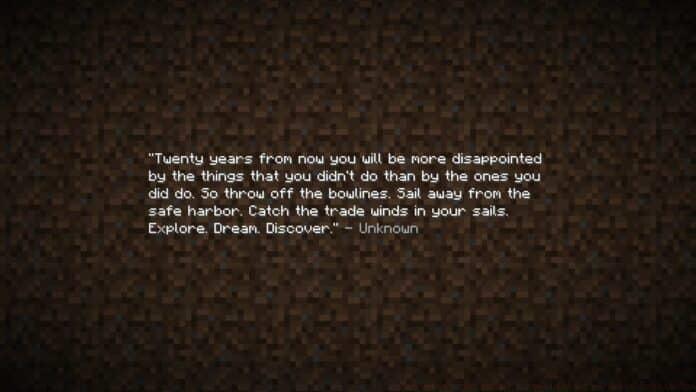
Gough detailed in his Substack publication how Markus “Notch” Persson, Minecraft’s original co-developer, personally recommended him to craft meaningful content for the game. The End Poem unfolds as an eight-minute textual experience players encounter after defeating the Ender Dragon, serving as the narrative climax to the Minecraft journey.
Over a decade ago, I composed Minecraft’s sole narrative element: the story revealed after conquering the Ender Dragon. (Players commonly reference this as The End Poem.)
Today marks the official liberation of this conclusion.
What practical implications does this carry?
🧵
The Copyright Battle That Never Was
During the creative process, Gough maintained communication with Mojang CEO Carl Manneh, describing their email exchanges as “unconventional dialogue” that created confusion about expectations. “While Carl maintained friendship with Markus, that relationship didn’t automatically extend to creative alignment with my vision,” Gough reflected.
The writer accepted EUR20,000 (approximately $21,000 USD) as compensation from Manneh but strategically declined to execute contracts that would have granted Mojang perpetual rights to The End Poem content.
Regarding additional pre-contract assurances like “massive exposure” within the Minecraft player community, Gough noted these promotional benefits never materialized through either Manneh or Persson’s efforts.
Following Microsoft’s acquisition of Minecraft in August 2014, Gough received renewed contractual overtures from Manneh seeking End Poem rights transfer. Despite persistent requests from both Manneh and Persson to formalize the agreement, Gough maintained his position and never signed the documentation.
“This situation lacks genuine antagonists,” Gough clarified across social media and Substack. “Please refrain from directing criticism toward Markus, Carl, or Microsoft representatives.” He characterized the corporate approach as standard capitalist protocol that many perceive as inherent business practice.
Creative Rights in Gaming: Lessons Learned
Gough articulated his philosophical rationale for releasing The End Poem for public utilization, asserting cosmic origins as the true source of creative inspiration. His sole financial request involves optional contributions through his PayPal account rather than mandatory licensing fees.
“This narrative transcends individual ownership while remaining universally accessible,” Gough philosophized. “The work exists in dimensions beyond conventional property frameworks.”
The author reaffirmed Microsoft’s legal inability to restrict public usage of the poem while requesting the corporation “continue disseminating my narrative globally.”
“The creative work now awaits public engagement. Enjoy its possibilities.”
Industry Implications: This case establishes crucial precedent for independent creators operating within major gaming ecosystems. Many developers inadvertently surrender creative rights through poorly negotiated contracts, making Gough’s strategic refusal particularly instructive for future content creators.
Common Pitfalls to Avoid: Never assume verbal agreements override written contracts. Always secure legal representation before engaging with corporate entities. Document all communications and maintain clear boundaries between friendship and business relationships within creative collaborations.
Practical Guide to Using the Liberated Content
Legal Usage Rights: The End Poem now resides in public domain, meaning anyone can reproduce, modify, distribute, or create derivative works without seeking permission or paying royalties. This includes educational use, commercial applications, artistic interpretations, and community projects.
Creative Applications: Content creators can incorporate the poem into Minecraft mods, video content, literary analysis, educational materials, artistic performances, and digital experiences. The liberation enables unprecedented creative freedom while honoring the work’s original spirit.
Attribution Best Practices: While not legally required, ethical usage suggests acknowledging Julian Gough as the original author and referencing the public domain status. This maintains historical context while embracing the liberated nature of the work.
Community Guidelines: Respect the philosophical nature of the work in derivative creations. Avoid misappropriation that contradicts the original message’s intent. The liberation represents an opportunity for creative expansion, not exploitation.
No reproduction without permission:GameCDjnh » Minecraft End Poem Is Available In Public Domain Now Julian Gough liberates Minecraft's End Poem to public domain after copyright disputes with Microsoft