
Complete guide to finding and using Amethyst Geodes in Minecraft with expert strategies
Understanding Amethyst Geodes in Minecraft
Discovering an underground geode creates one of Minecraft’s most memorable moments, offering both visual splendor and practical utility. These purple crystal formations provide more than just aesthetic appeal—they unlock specialized crafting opportunities unavailable elsewhere in the game.
Amethyst represents a complete resource category within Minecraft’s mineral system, with all variations originating exclusively from geodes. These spherical underground structures generate naturally throughout the Overworld, containing valuable crystalline resources.
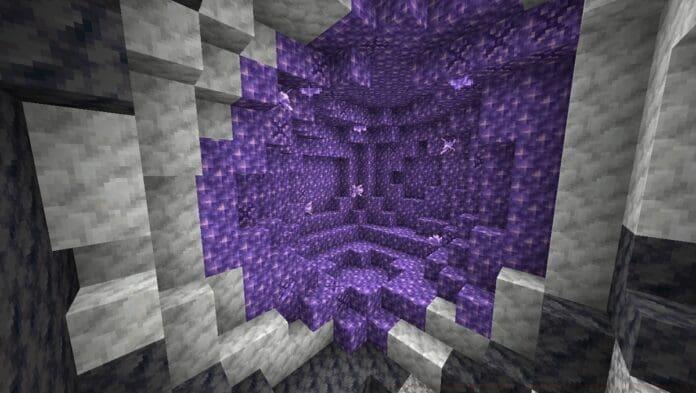
Geodes stand out dramatically from their surrounding stone environments due to their unique composition and coloration. They can generate at various depths and may occasionally breach the surface in rare circumstances, making them potentially discoverable in any Overworld biome during exploration.
When you locate a geode, it emits distinctive purple particle effects and produces gentle crystalline sounds, serving as both visual and auditory indicators of your discovery.
Advanced Geode Hunting Strategies
Successful geode hunting requires systematic exploration and understanding of generation patterns. Begin by thoroughly searching previously explored cave systems, as geodes may have generated in areas you’ve already visited but potentially overlooked.
- Conduct methodical searches of discovered cave networks, paying special attention to larger caverns where geodes frequently generate
- When mining downward, the smooth basalt layer serves as your primary indicator of an underlying geode structure
- The calcite layer appears immediately above the amethyst crystals, providing a secondary confirmation marker
- After carefully mining through the calcite barrier, you’ll access the valuable amethyst clusters within
Pro Tip: Use the F3 debug screen to check your Y-coordinate—geodes most commonly generate between levels 30 and -64, with higher concentrations below sea level. Bring plenty of torches and consider using fortune-enchanted tools to maximize amethyst yield.
Avoid These Common Mistakes: Never mine amethyst clusters with silk touch—they won’t drop anything. Don’t break the budding amethyst blocks, as they’re irreplaceable and continuously generate new clusters. Always mine fully-grown clusters for maximum resource efficiency.
Amethyst Types and Properties
Amethyst clusters progress through four distinct growth stages, each with unique characteristics and mining yields. Understanding this progression is crucial for efficient resource gathering.
Small Amethyst Buds: The initial growth stage that yields no resources when mined. These will naturally progress to larger stages over time.
Medium Amethyst Buds: Intermediate growth phase that also provides no drops but indicates healthy cluster development.
Large Amethyst Buds: Nearly mature clusters that still don’t yield amethyst shards but signal imminent full growth.
Amethyst Clusters: Fully matured crystals that drop 4 amethyst shards when mined normally, or more with Fortune enchantments. These are the only harvestable stage.
Budding amethyst blocks serve as the source of all cluster growth and cannot be obtained in survival mode. They naturally generate new buds over time, making each geode a renewable resource if properly maintained.
Crafting with Amethyst Resources
Amethyst shards enable creation of several unique items that enhance both functionality and aesthetics in your Minecraft world. Each recipe serves specific purposes that can significantly improve your gameplay experience.
Spyglass Crafting: Combine 1 amethyst shard with 2 copper ingots to create a spyglass. This optical tool provides significant zoom capability for long-range observation, essential for surveying terrain or spotting distant landmarks and mobs.
Tinted Glass Production: Surround 1 amethyst shard with 8 glass blocks in the crafting grid to create 8 tinted glass blocks. This unique building material reduces light transmission without obscuring visibility, perfect for creating dark rooms for mob farms or preserving interior aesthetics while controlling light levels.
Decorative Applications: Amethyst blocks themselves serve as striking decorative elements, with their crystalline texture and purple hue adding visual interest to builds. The blocks emit gentle light and subtle particle effects, creating atmospheric lighting solutions.
Strategic Considerations: Prioritize spyglass creation for exploration advantages, then focus on tinted glass for functional builds. Reserve some shards for decorative purposes to enhance your base’s visual appeal.
Recommended | How to get diamonds in Free Fire in June 2021?
No reproduction without permission:GameCDjnh » How to find Amethyst Geodes in Minecraft? Complete guide to finding and using Amethyst Geodes in Minecraft with expert strategies