
Master CS:GO’s Trust Factor system with practical strategies to improve matchmaking quality and avoid common pitfalls
What is Trust Factor and How It Works
Valve’s Trust Factor represents a sophisticated behavioral analysis system integrated into CS:GO’s matchmaking infrastructure. Rather than relying solely on competitive rank or Prime status, this mechanism evaluates comprehensive player data across Steam’s ecosystem to create more harmonious gaming environments. The algorithm assesses behavioral patterns, reporting history, and community interactions to calculate an individual trust score that determines match placement.
In practical application, players demonstrating positive community engagement typically find themselves matched with teammates and opponents who share similar behavioral standards. Conversely, individuals with patterns of disruptive conduct—whether through toxic communication, frequent abandoning, or suspicious gameplay—increasingly encounter others with comparable behavioral profiles. This creates natural segregation where well-behaved players experience fewer disruptive matches while problematic users face the consequences of their actions within their own matchmaking pool.
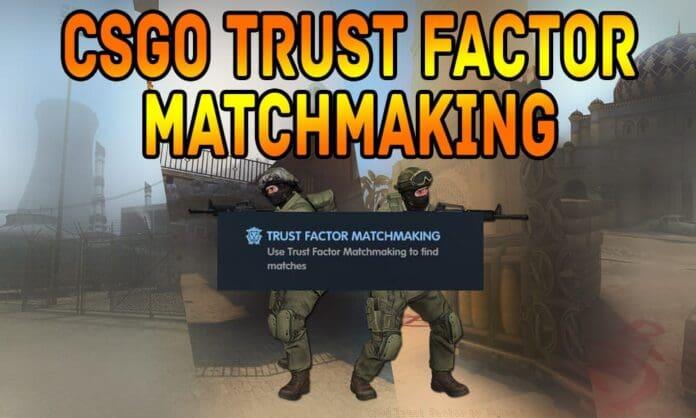
Valve’s internal testing demonstrates promising outcomes, with Trust Factor-enabled matches generating significantly fewer player reports across all Prime status levels. This indicates successful implementation of the system’s core objective: reducing negative interactions by grouping players based on behavioral compatibility. The mechanism effectively creates separate matchmaking lanes where legitimate players encounter fewer cheaters (HvH scenarios become concentrated among suspicious accounts) while positive community members enjoy more sportsmanlike competition.
Trust Factor FAQ: Key Questions Answered
Q: What behavioral metrics influence the Trust Factor matchmaking algorithm?
A: Valve maintains deliberate opacity regarding specific Trust Factor components for strategic reasons. This prevents gamers from artificially manipulating their scores through targeted behavior modification rather than genuine community participation. The constantly evolving nature of the algorithm means any published criteria would rapidly become outdated. Generally, Valve examines your historical conduct within CS:GO alongside broader Steam platform interactions to ensure matchmaking accuracy.
Q: Is there visibility into my personal Trust Factor rating?
A: Valve intentionally withholds individual Trust Factor scores to prevent obsessive optimization attempts. The system aims to deliver improved matchmaking transparently without requiring user intervention. Similar to skill group fluctuations, your matching range adapts dynamically based on regional population, time of day, and selected map preferences.
Q: What concrete actions elevate Trust Factor standing?
A: Consistent positive participation within both CS:GO and the wider Steam community remains the primary improvement method. As Valve refines their Trust Factor modeling and factor weighting, sustained constructive engagement provides the clearest path to better matches. Extended gameplay generates additional behavioral data, enabling more precise compatibility matching over time.
Q: Does Prime membership enhance Trust Factor evaluation?
A: Absolutely. Verified phone numbers and established CS:GO competitive ranks contribute significantly to Trust Factor calculations. Existing Prime members receive credit for their verification and gameplay history. Players without linked phone numbers should complete this verification to immediately improve their matchmaking experience.
Q: Are newcomers automatically assigned low Trust Factor ratings?
A: Not necessarily. Trust Factor incorporates your entire Steam community history, meaning positive participation in other games can establish high initial trust levels in CS:GO. New players with established Steam accounts demonstrating good standing often enter with favorable matchmaking conditions.
Advanced Trust Factor Optimization
Q: How does Valve measure Trust Factor system effectiveness?
A: Beyond collecting player feedback, Valve employs objective metrics including match completion rates and reporting/kick frequency reductions. These indicators reliably measure matchmaking satisfaction, with Prime’s success establishing the evaluation framework now applied to Trust Factor assessment.
Q: What recourse exists for suspected low Trust Factor impacting match quality?
A: Players experiencing consistently poor match quality should email CSGOTeamFeedback@valvesoftware.com with “Trust Factor Feedback” in the subject line. Include detailed experience descriptions and your Steam ID to provide Valve with actionable data for system refinement.
Q: How does party play affect Trust Factor matchmaking?
A: When queuing as a group, the matchmaking system utilizes the lowest Trust Factor score among all party members. This prevents high-trust players from effectively “boosting” problematic accounts into better matches. Friends with poor match quality should submit individual feedback emails as described above.
Proactive Trust Building Strategies
Beyond basic positive behavior, advanced players should focus on consistent match completion, constructive communication, and avoiding excessive reporting. Building extensive gameplay history across multiple Steam titles demonstrates long-term community commitment. Regularly playing during peak hours provides more matching data points for accurate placement.
Common Trust Factor Pitfalls
Avoid frequent partying with low-trust players, as this directly impacts your match quality. Abandoning matches—even occasionally—significantly damages your rating. Excessive false reporting trains the system to discount your future reports, reducing their impact on genuinely problematic players.
No reproduction without permission:GameCDjnh » CSGO Trust Factor by Valve – About, FAQs, and How it works Master CS:GO's Trust Factor system with practical strategies to improve matchmaking quality and avoid common pitfalls