
TL;DR
- Blizzard implemented matchmaking adjustments to address player concerns about statistically disadvantaged teams
- The May 14 update focuses on preventing extended loss streaks through improved team balancing algorithms
- Community response remains divided between appreciation for changes and skepticism based on past assurances
- Strategic gameplay approaches can help players maximize success within the updated matchmaking system
- Ongoing monitoring and refinement of matchmaking systems will continue based on player data and feedback
The gaming community surrounding Overwatch 2 has extensively discussed what players colloquially term the “loser’s queue” – a perceived pattern where consecutive competitive match losses seem to trigger placement into teams with progressively lower statistical win probabilities. This phenomenon manifests when players experience extended defeat sequences in ranked gameplay, resulting in subsequent match allocations that appear systematically disadvantaged.
From a game design perspective, matchmaking systems must balance numerous variables including player skill ratings, recent performance trends, role preferences, and connection stability. The complexity of these calculations can sometimes create perceived patterns that players interpret as intentional queue manipulation, though developers typically design systems to maximize fair competition rather than engineer specific outcomes.

Responding to substantial community feedback and internal data analysis, Blizzard Entertainment deployed significant matchmaking modifications in their May 14 update. These technical adjustments, thoroughly documented in the official Overwatch 2 Patch Notes, specifically target the underlying mechanisms that contributed to the loser’s queue perception among the player base.
The core enhancement centers on the matchmaking engine’s refined capability to identify and avoid creating statistically imbalanced team compositions. Blizzard’s development team clarified that these algorithmic improvements aim to provide players experiencing loss sequences with genuinely equitable opportunities to reverse their fortunes, thereby improving overall match quality and competitive integrity across all skill tiers.
This represents a notable shift from earlier developer positions that explicitly denied the existence of intentionally engineered loser queues within Overwatch 2’s matchmaking architecture. The reversal demonstrates how persistent player reporting coupled with telemetry analysis can prompt substantive system reevaluation and meaningful quality-of-life improvements.
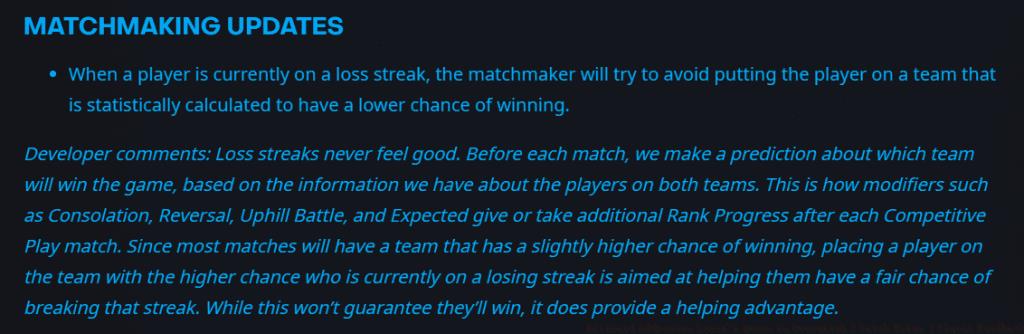
The Overwatch 2 community has responded to these matchmaking revisions with distinctly mixed reactions. A segment of players appreciates Blizzard’s willingness to address longstanding match quality concerns, viewing the changes as validation of their gameplay experiences and a positive step toward competitive fairness.
Conversely, another player faction maintains skepticism, referencing previous developer assurances that specifically denied the existence of loser queue mechanisms. This skepticism stems from what some perceive as inconsistent messaging regarding matchmaking functionality throughout Overwatch 2’s development history.
Notably, Blizzard’s official communications carefully avoid using the term “loser’s queue” when describing these improvements, instead emphasizing continuous matchmaking system evaluation to ensure balanced and equitable experiences for all participants regardless of skill level or recent performance history.
Understanding matchmaking dynamics can significantly improve your competitive experience. When encountering potential loss streaks, consider implementing strategic countermeasures rather than continuing repetitive gameplay patterns. Taking breaks between sessions, analyzing replay footage to identify improvement areas, and adjusting hero selections based on team composition needs can disrupt negative performance cycles.
Advanced players should focus on mastering multiple heroes within their preferred role to maintain flexibility when the matchmaking system assembles teams. Developing proficiency with 2-3 heroes in your primary role and 1-2 in a secondary role creates adaptability that can overcome statistical disadvantages. This approach mirrors the strategic depth found in other team-based shooters where class selection and role flexibility determine match outcomes.
Communication and team coordination remain critical factors that matchmaking algorithms cannot fully quantify. Using voice chat for callouts, coordinating ultimate ability usage, and establishing clear team strategies can compensate for statistical imbalances. Players should also monitor their performance metrics through third-party stat tracking tools to objectively assess whether perceived patterns align with actual gameplay data.
Blizzard’s acknowledgment of matchmaking concerns and subsequent system adjustments highlights their commitment to responsive game development based on community input and data-driven analysis. This development philosophy suggests ongoing refinements will continue as player behavior and system performance metrics evolve over time.
The gaming community anticipates further matchmaking transparency and potentially additional quality-of-life features as Overwatch 2 continues its live service development cycle. These ongoing improvements parallel development approaches in other major titles where comprehensive game systems receive continuous optimization based on player engagement patterns and competitive integrity requirements.
As players adapt to the revised matchmaking parameters, the long-term impact on competitive ladder dynamics, queue times, and overall player satisfaction will determine whether additional adjustments become necessary. The relationship between developer transparency and community trust remains crucial for maintaining a healthy competitive ecosystem, much like the weapon balancing considerations detailed in our weapons unlock guide for other tactical shooters.
Action Checklist
- After two consecutive losses, take a 15-30 minute break to reset mental focus
- Review match replays to identify 3 specific gameplay improvements
- Practice with 1-2 alternative heroes in your main role to increase flexibility
- Use voice chat for coordinated ultimate usage in your next 3 matches
- Monitor performance statistics weekly to track improvement trends
No reproduction without permission:GameCDjnh » Blizzard Addresses Loser’s Queue in Overwatch 2 Patch Notes | Player Feedback Blizzard addresses Overwatch 2 matchmaking concerns with new system improvements and player strategies